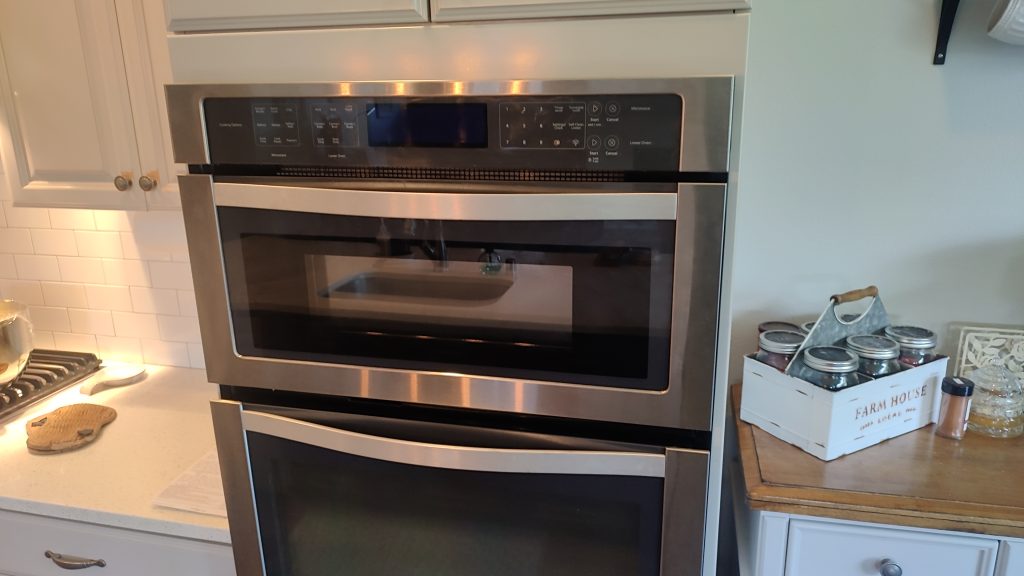
- Appliance: Whirlpool WOC97ES0ES02 built-in microwave and wall oven combination.
- Customer complaint: The microwave occasionally stopped during a cycle when the upper door was touched or moved.
- First diagnosis: Broken door interlock switch holder and one displaced interlock switch.
- Return diagnosis: A small amount of microwave door play was changing the door position relative to the interlock switches.
- Repair: Both microwave door hinges replaced with W10874474, which supersedes 461968979601.
- Customer charge for the second repair: Hinges only; repeat labor was completed under warranty.
- Result: Excessive door play was eliminated, and touching the door no longer interrupted the cycle during final testing.
The customer reported that this Whirlpool built-in microwave and wall oven combination would occasionally stop in the middle of a cycle. Sometimes, simply touching the upper microwave door was enough to interrupt operation.
With symptoms like these, diagnosis usually starts with the door interlock switches, the switch holder, and the mechanism that activates the switches. If a switch is damaged, out of position, or not being pressed far enough, the microwave may fail to start or may stop during operation.
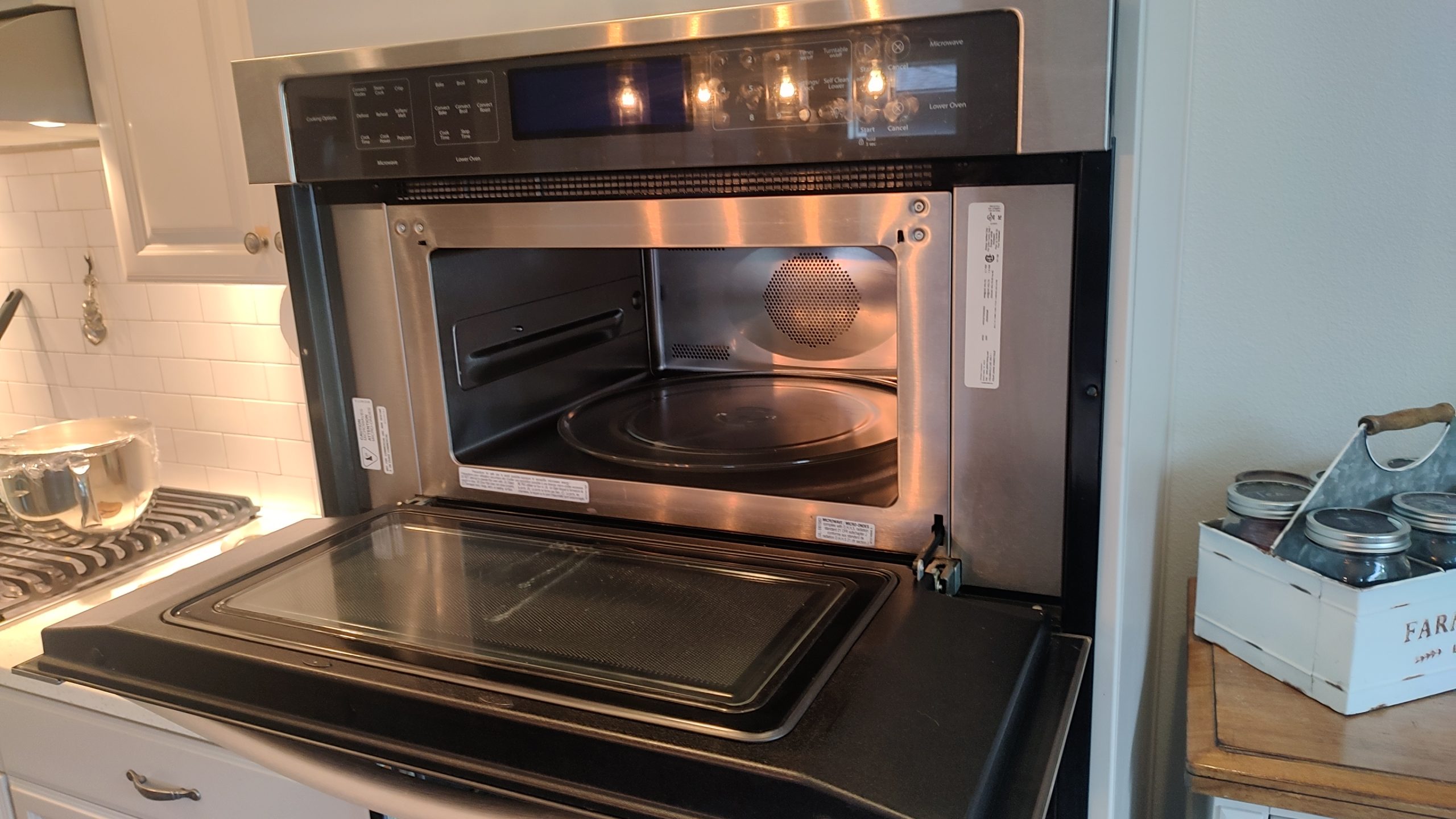
First Repair: Door Interlock Switches and Switch Holder
During the first service visit, we disassembled the door interlock switch assembly and found two specific problems:
- the interlock switch holder was broken;
- one of the door switches had shifted out of its normal position.
The displaced switch was operating very close to the edge of its activation point. Even a small amount of door movement could prevent it from being pressed consistently, causing the microwave to interrupt the cycle.
We replaced the switch holder and the door interlock switches. This part of the repair was not recorded on video or shown in the photos because the main subject of this article is the later door hinge replacement.
The damage we found matched the customer’s complaint. After the new parts were installed, the problem did not occur during testing.
The Problem Returned Several Weeks Later
Several weeks later, the customer contacted us again because the microwave had started reacting to movement of the door.
During the second inspection, we noticed a small amount of play in the upper microwave door. There was no severe sagging, obvious misalignment, or visible damage to either hinge.
However, we suspected that even this small amount of movement could change the door’s position relative to the interlock switches and affect how consistently they were activated.
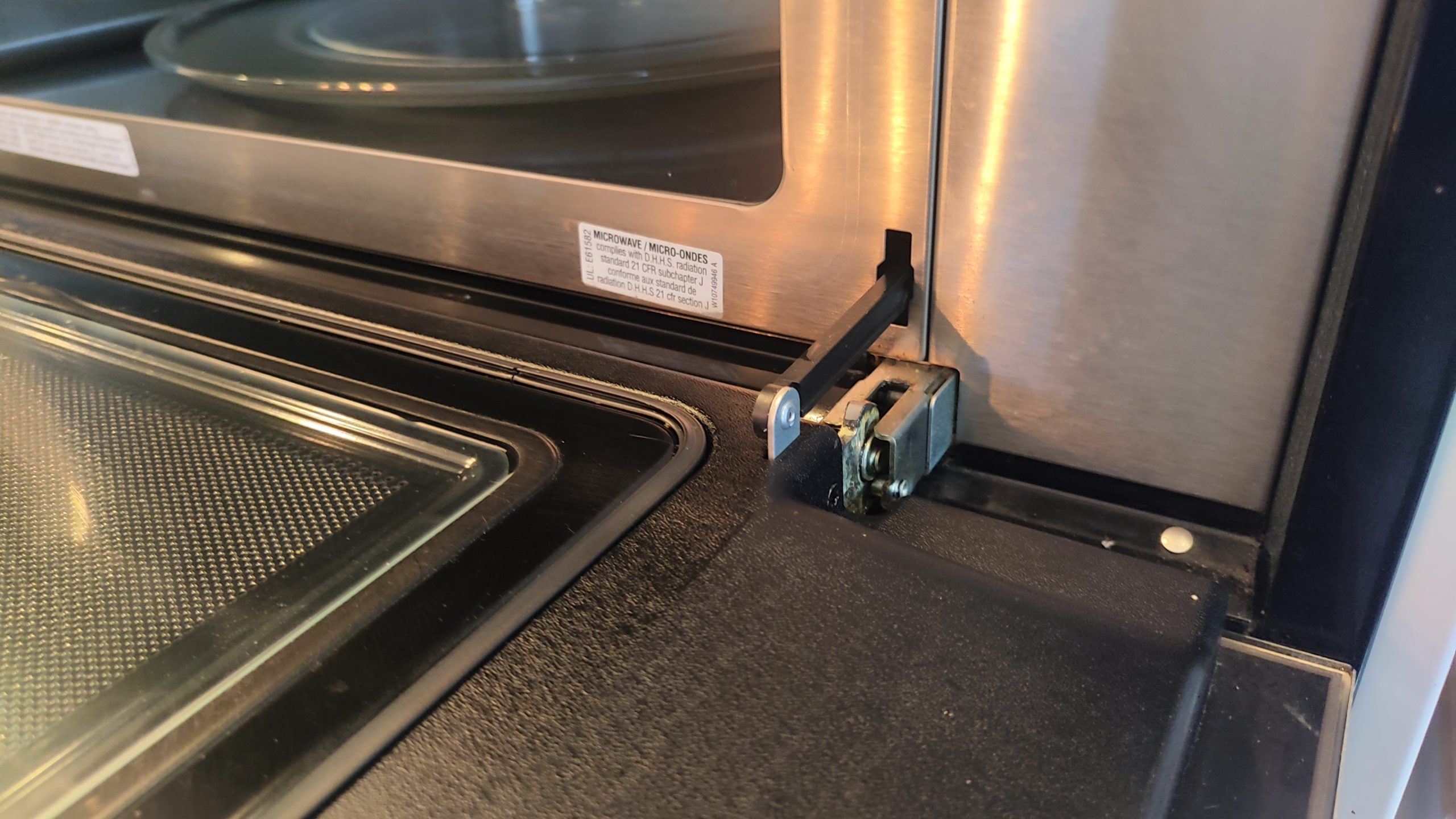
After rechecking the door and switch mechanism, I decided to replace both microwave door hinges.
To be completely honest, I was not certain that the hinges would solve the problem. Microwave door hinges are rarely replaced unless the problem is obvious—for example, when the door is sagging badly, closing unevenly, or has a visibly damaged hinge.
None of those conditions were present here. The only signs were a small amount of door play and the microwave’s sensitivity to movement of the door.
The original Whirlpool OEM hinge part number listed for this appliance was 461968979601. That number has been superseded by W10874474, so two new W10874474 hinges were ordered.
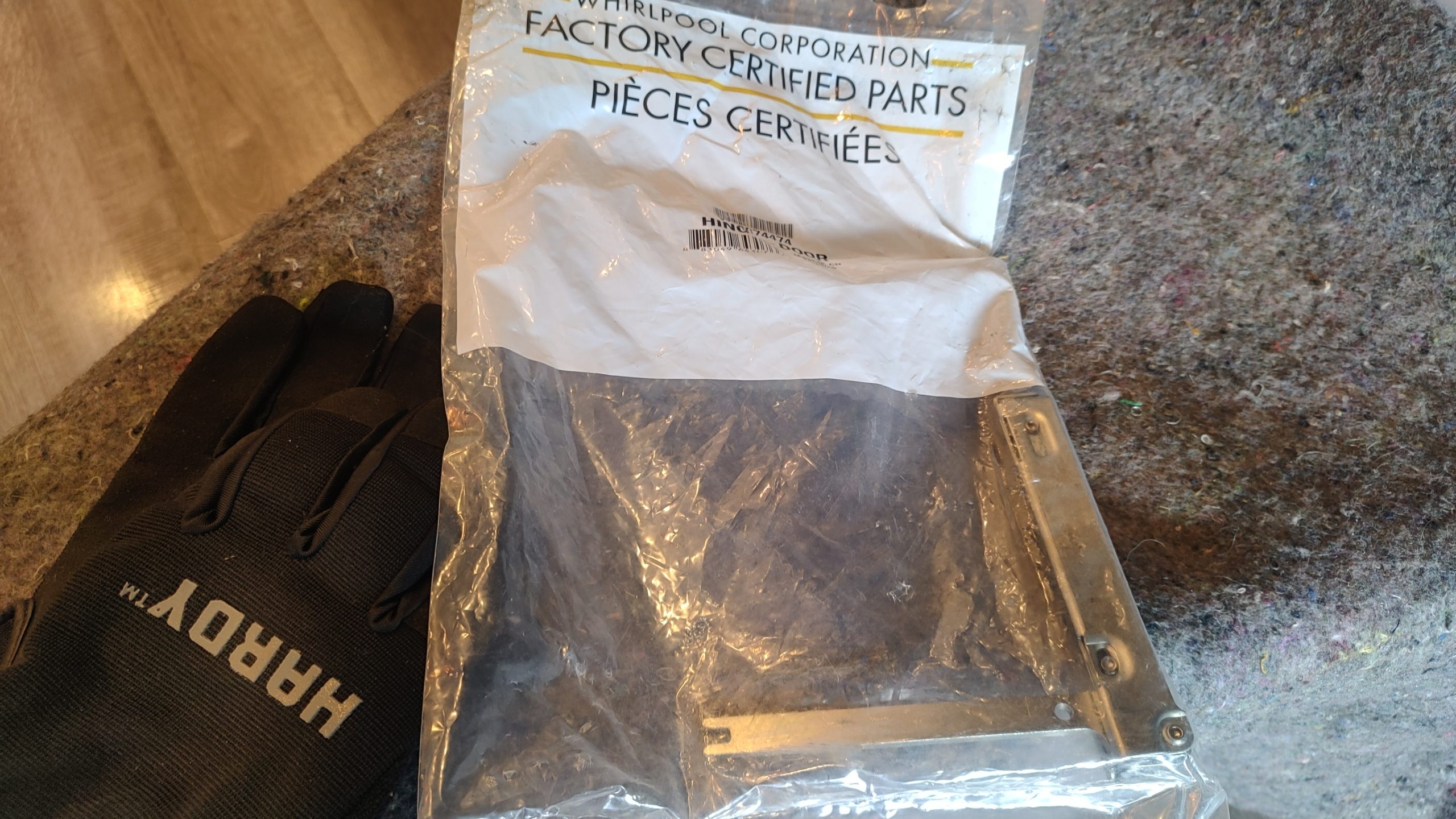
Why the Hinges Were Not Suspected During the First Visit
The small amount of movement was noticeable during the original repair, but it did not initially look like a hinge failure.
On this style of door, which does not use additional upper locators or guides to hold the closed door in a completely fixed position, a small amount of movement can be difficult to distinguish from normal free play. In this case, the movement was minimal and did not visually suggest worn hinges.
More importantly, the first inspection had already revealed a broken switch holder and a displaced interlock switch. Those defects directly matched the customer’s complaint and required replacement regardless of the condition of the hinges.
Only after the symptom returned with a new switch holder and new interlock switches did the small amount of door play become a likely contributor to the problem.
Accessing the Hinges Required Major Disassembly
At first, replacing door hinges may sound simple: remove the door, take out a few screws, and install the new parts.
On the Whirlpool WOC97ES0ES02 wall oven combination, the process is much more involved. The microwave is installed above the oven, and its door hinge mounting points are located deep inside the metal cabinet.
Before pulling the appliance from the wall cabinet, we removed both doors—the microwave door and the oven door—and took the oven racks out. Removing these parts significantly reduced the weight of the appliance and lowered the risk involved in moving it.
The complete microwave and oven combination was then pulled out of the cabinet and placed on a strong work platform.
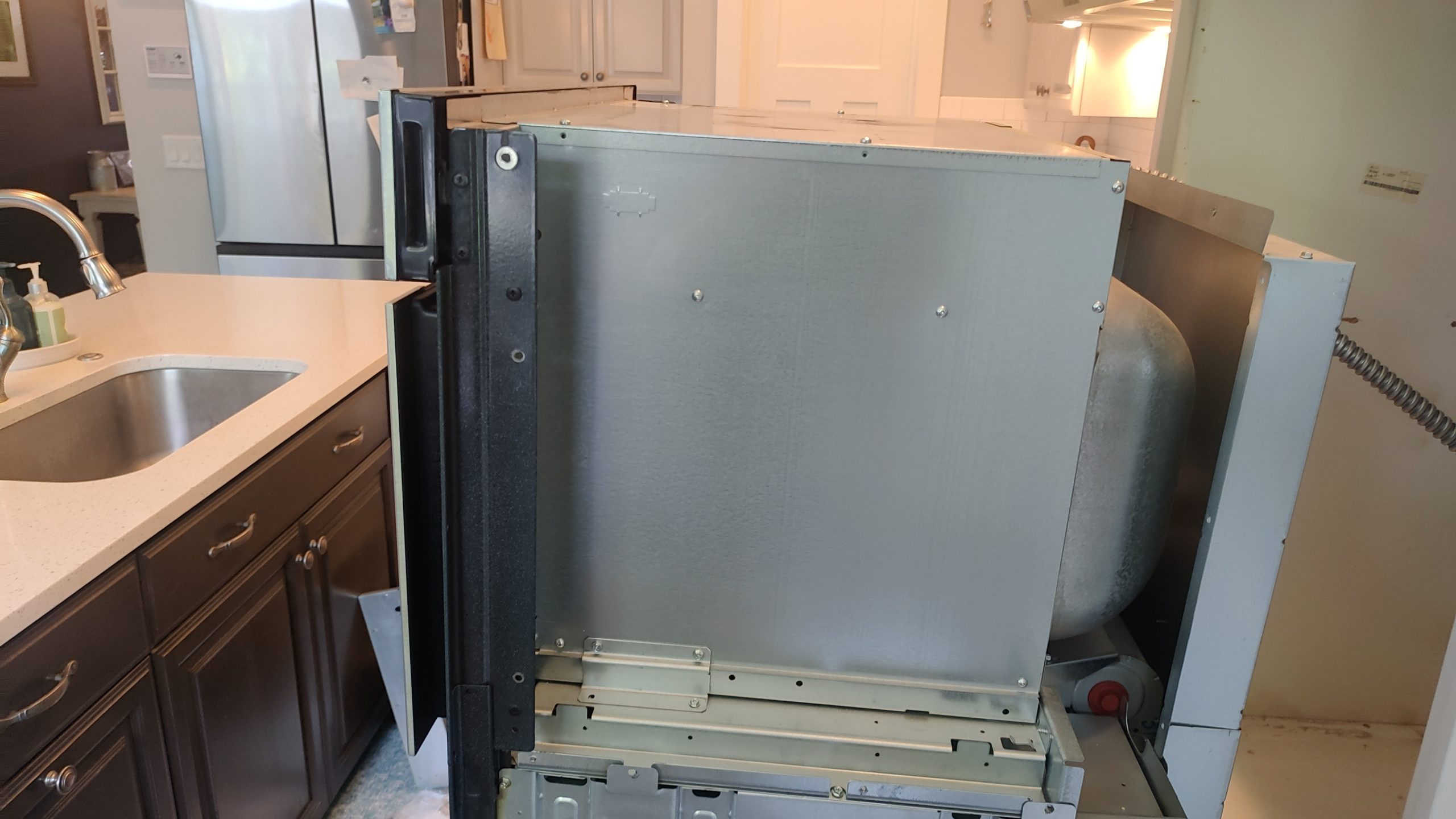
Next, we had to remove most of the outer metal panels surrounding the upper section, including:
- both side panels;
- the top panel;
- sections of the rear cabinet;
- additional metal pieces covering the door mechanism.
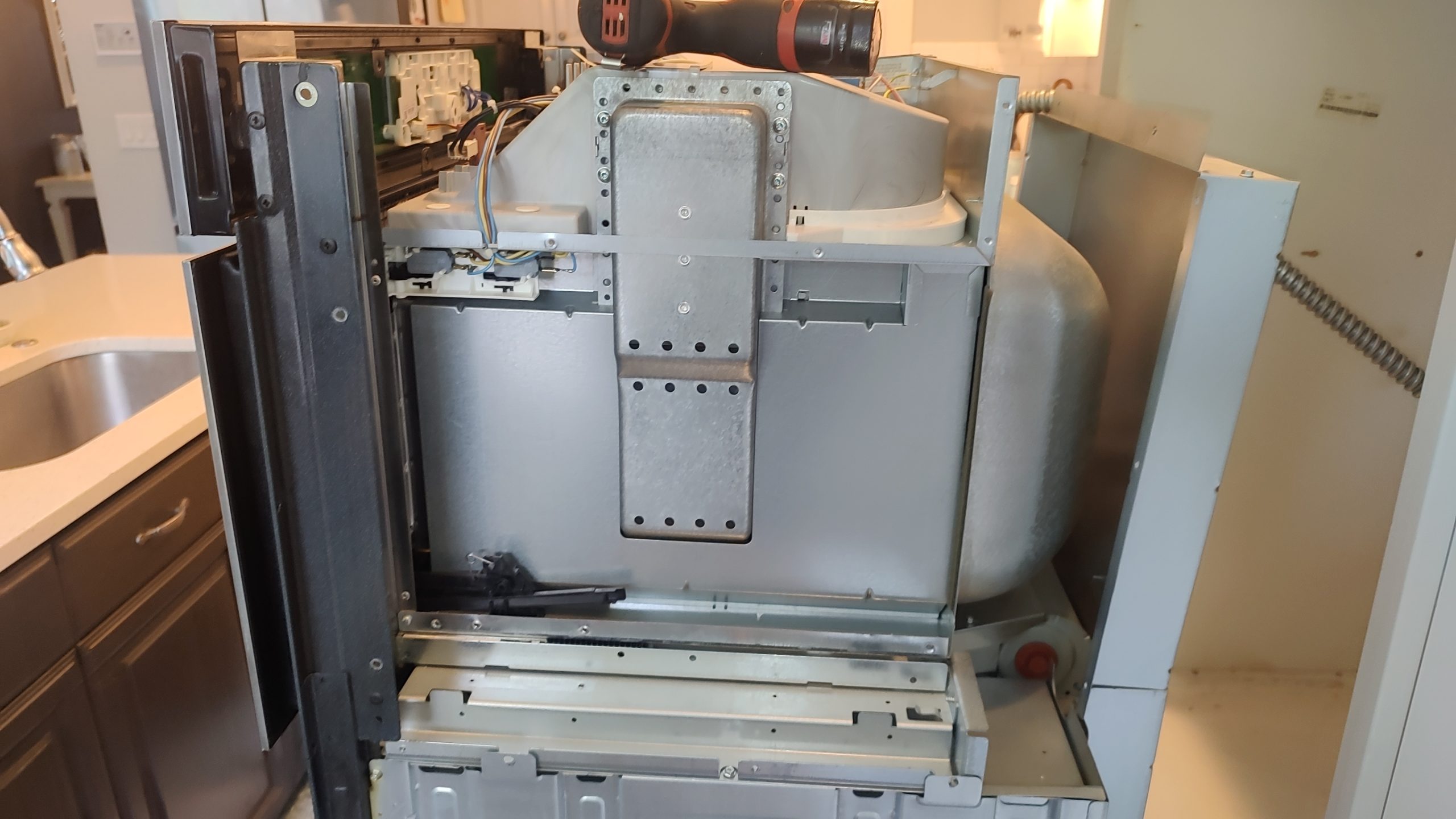
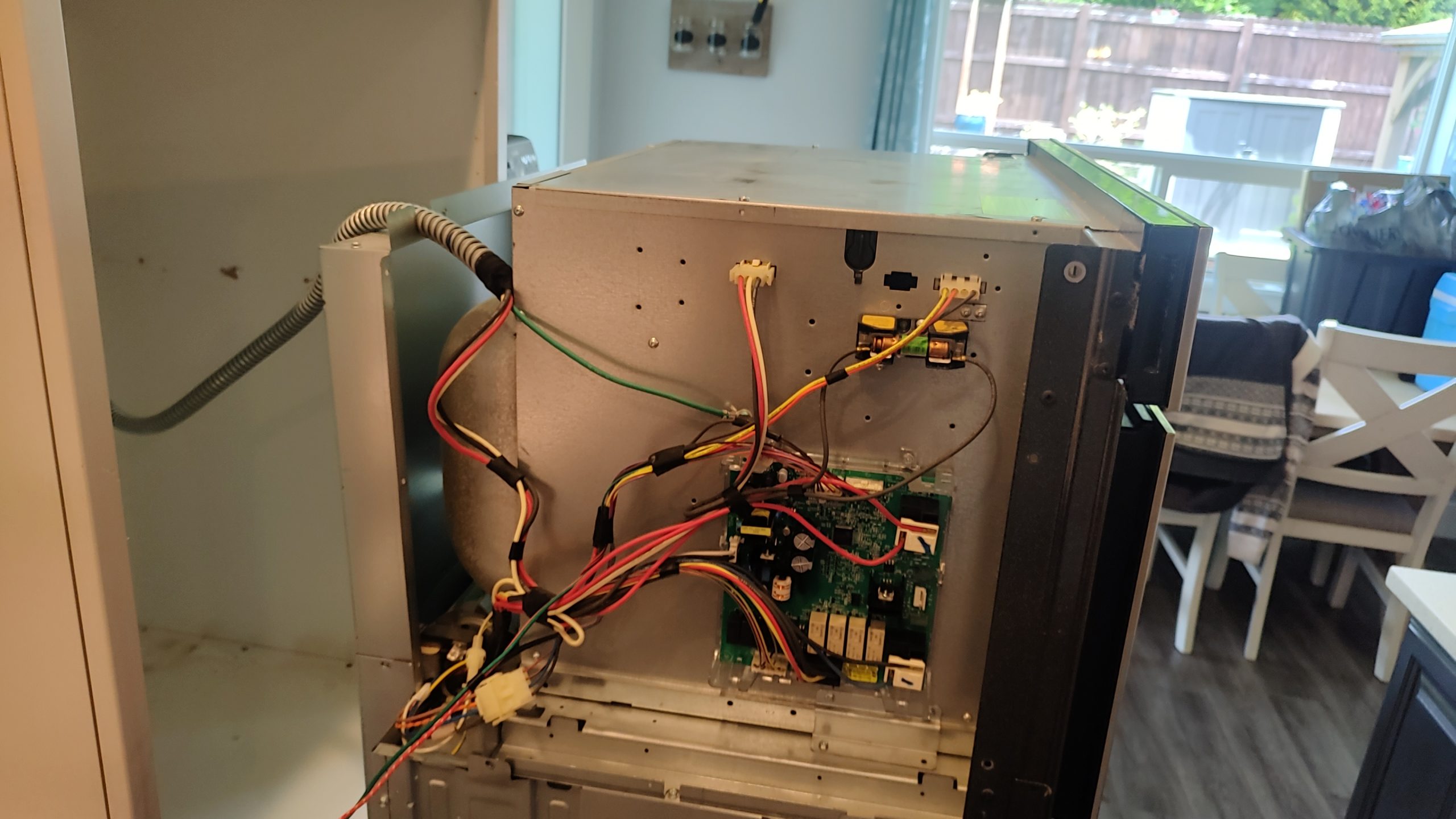
Even after removing those panels, the hinge mounting screws were still inaccessible.
A large black internal bracket covered the hinge area. It was fitted so tightly that it looked more like a permanent structural part than a service panel. The bracket had to be carefully released and worked out of the cabinet.
Only then could we reach the screws securing the hinges to the microwave chassis.
Removing the Screws Was Not Enough
Even after all the mounting screws were removed, the old hinges did not slide out freely.
The hinge openings were manufactured with almost no extra clearance. The hinges were held not only by their screws but also by the surrounding shape of the metal cabinet.
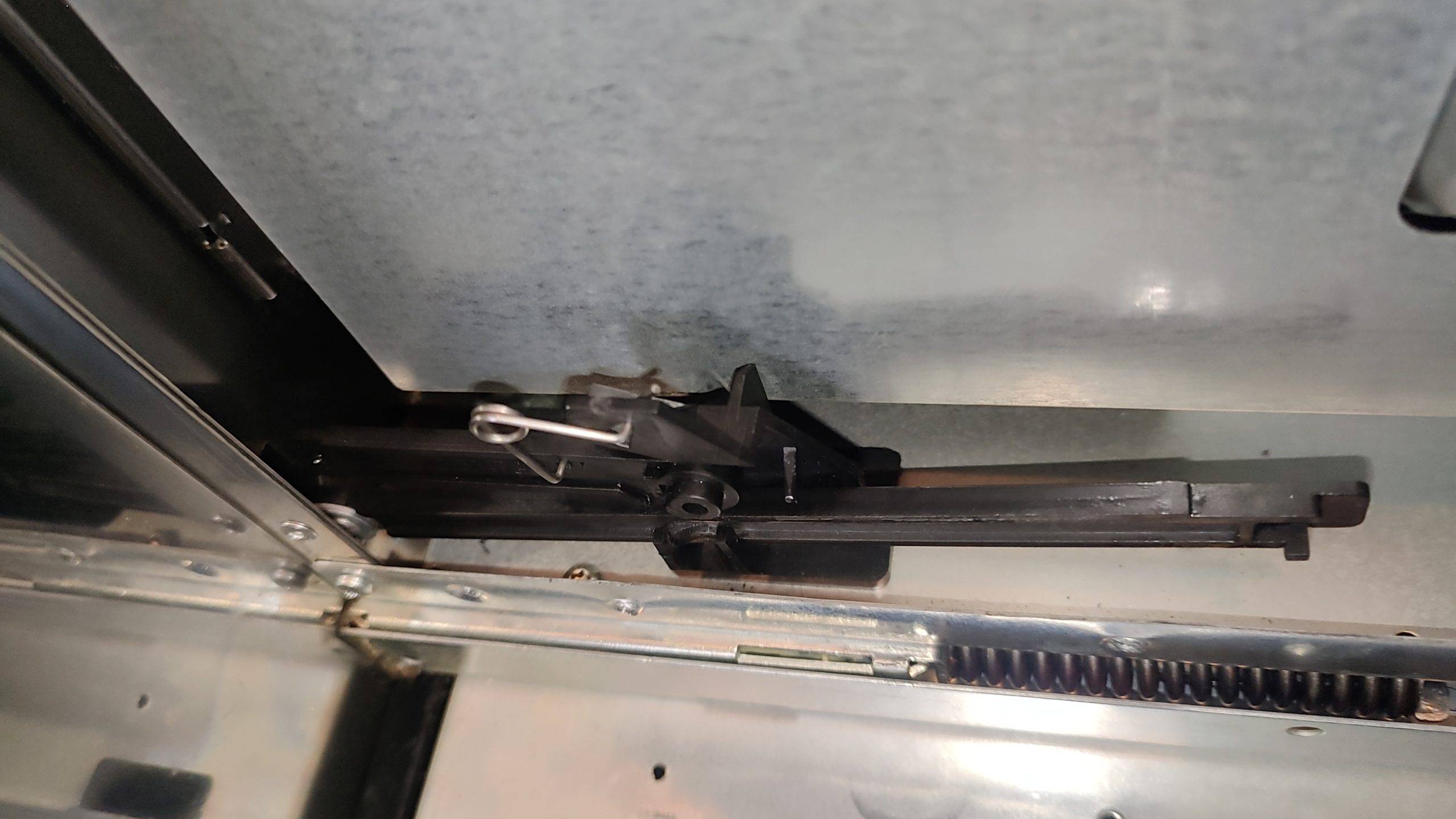
Each old hinge had to be gradually worked out of its mounting position while changing its angle inside the chassis. Installing the new hinges required the same careful process. Each hinge had to be guided into the cabinet and aligned precisely with the mounting holes.
Both hinges on the upper microwave door were replaced.
Repair Result
After installing the new hinges, we reassembled the appliance and returned it to the wall cabinet.
We then tested the microwave while opening and closing the door and while applying light pressure to different areas of the door.
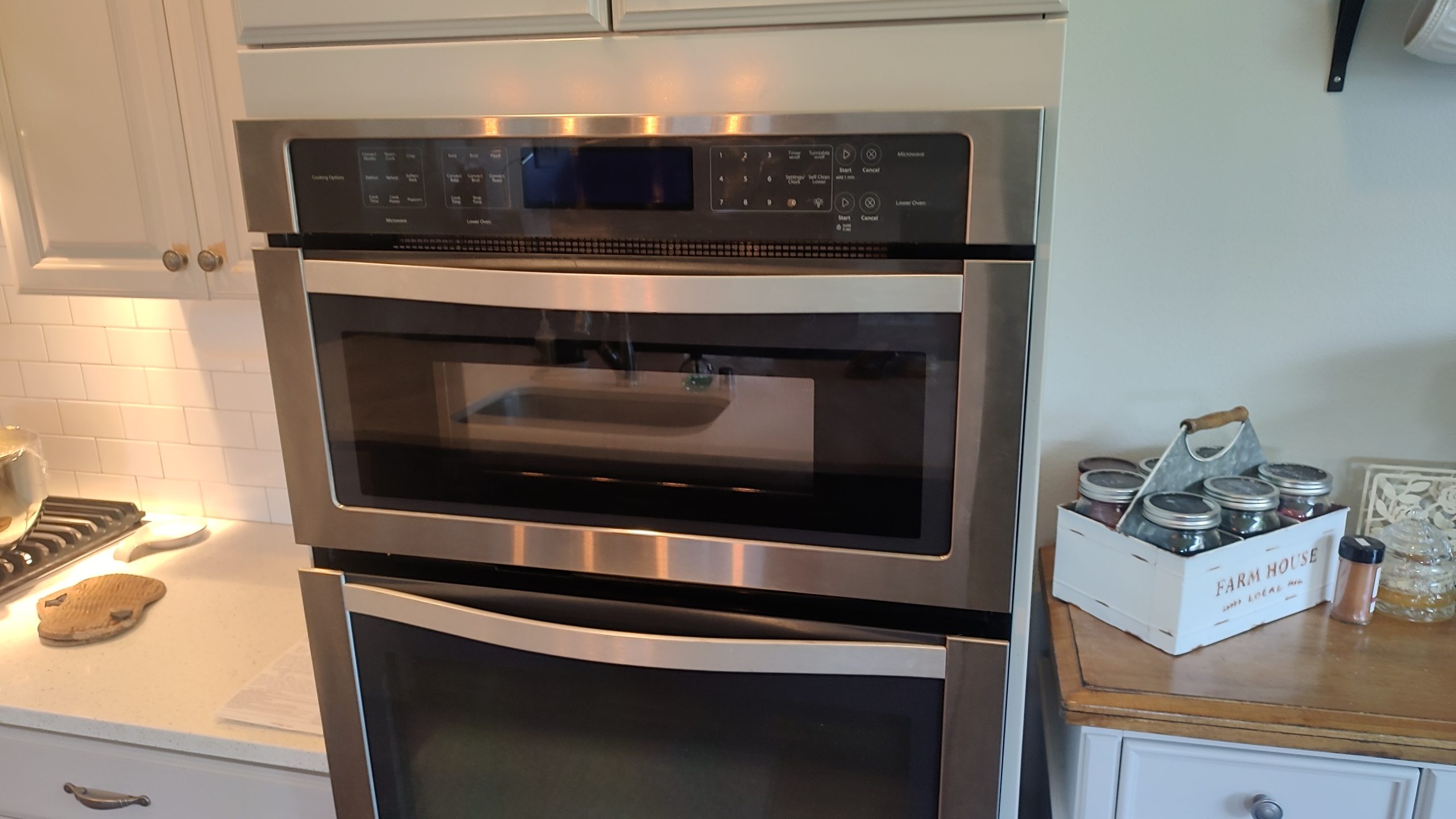
The excessive play was gone, and the position of the door relative to the interlock switches was stable. During final testing, the microwave operated normally, and touching the door no longer interrupted the cycle.
This repair was also a valuable learning experience for me. Microwave door hinges rarely need replacement, especially when there is no obvious damage and the only symptom is a very small amount of movement.
You live and learn.
For more documented jobs with real diagnosis, parts, photos, and repair results, browse our EasyFix appliance repair cases.
EasyFix provides scheduled appliance repair service across Clark County, Cowlitz County, and the Portland Metro Area. Check our service areas for current coverage.
Whirlpool Microwave Door and Hinge Repair FAQ
Should the door interlock switches or the door hinges be replaced when a microwave stops after the door is touched?
Diagnosis usually starts with the door interlock switches, the switch holder, and the mechanism that presses the switches. These parts commonly cause a microwave to stop or fail to start when the door moves.
Door hinges are replaced less often. On door designs without additional upper locators, a small amount of hinge movement can be harder to distinguish from normal free play. The correct repair should be determined through inspection and testing rather than by replacing parts based only on the symptom.
Why were the door hinges not replaced during the first repair if the door play was already noticeable?
The movement was noticeable, but it was very slight and did not initially look like a hinge failure.
The first inspection also revealed a broken interlock switch holder and a displaced door switch. Those were definite defects that directly matched the customer’s complaint and required replacement.
The hinges became a stronger suspect only after the symptom returned with a new switch holder and new interlock switches.
The hinge replacement was a second repair. What did the customer pay for the return visit?
The customer paid only for the two new door hinges. The labor required to remove the appliance, disassemble the cabinet, and replace the hinges was completed under warranty with no additional labor charge.
Had the effect of the hinges been identified during the first repair, the switches, switch holder, hinges, and labor would have been included in the same repair order.
Because the effect of the small amount of door play had been underestimated during the original diagnosis, charging the customer the full labor cost for the second repair would not have been appropriate.
For details about service calls, labor, parts, and how repair estimates are explained before work begins, see our appliance repair pricing guide.
Does the return of the symptom mean the first repair was performed incorrectly?
No. The first repair was necessary because the switch holder was broken and one of the interlock switches was out of position. Those parts required replacement regardless of the condition of the hinges.
In this case, the appliance had two related problems. The damaged interlock switch assembly was obvious, while the effect of the small amount of hinge play became clear only after the symptom returned.
The first repair corrected the defects that had been found, but a second, less obvious cause remained.
Can a small amount of microwave door play really stop the microwave?
Yes. Door interlock switches have a short operating range and must remain fully activated whenever the door is closed.
If the door position changes, one switch may move close to the edge of its activation point. The microwave may then fail to start or may interrupt a cycle while running.
In this repair, excessive hinge play allowed the door to move relative to the interlock switches.
Can this hinge replacement be completed as a DIY repair?
This repair is not recommended without experience servicing built-in appliances and a proper understanding of microwave electrical safety.
The combination unit must be safely disconnected, removed from the wall cabinet, supported on a strong platform, partially stripped of its outer cabinet, and correctly reassembled.
A microwave’s high-voltage capacitor may retain a dangerous electrical charge even after power has been disconnected.
There is also a practical risk: if the appliance is left partially disassembled, another service company may decline to continue the repair or may not provide a warranty on reassembly performed after someone else’s work.
Why were both doors and the oven racks removed before pulling out the appliance?
The glass microwave and oven doors account for a significant portion of the combination unit’s total weight. Removing them makes the appliance easier and safer to move.
The oven racks weigh less, but they can slide inside the oven cavity during removal and potentially damage the enamel, glass, or surrounding cabinet.
Reducing the appliance’s weight lowers the load on the technicians, the work platform, and the kitchen cabinetry. All removed parts must be stored safely and reinstalled in the correct position.
Can the hinges on a Whirlpool WOC97ES0ES02 be replaced without removing the appliance from the cabinet?
No. On the Whirlpool WOC97ES0ES02, the microwave hinge mounting points are located inside the metal cabinet of the combination unit.
The appliance had to be completely removed from the wall cabinet. The outer panels and an internal bracket then had to be removed before the hinge screws could be reached.
Even after the mounting screws were removed, the old hinges remained tightly trapped by the shape of the chassis. Removing only the microwave door and a few accessible screws is not enough to replace the hinges on this model.
The EasyFix team 🤝
No Upsells. No Nonsense. Just Honest Work.