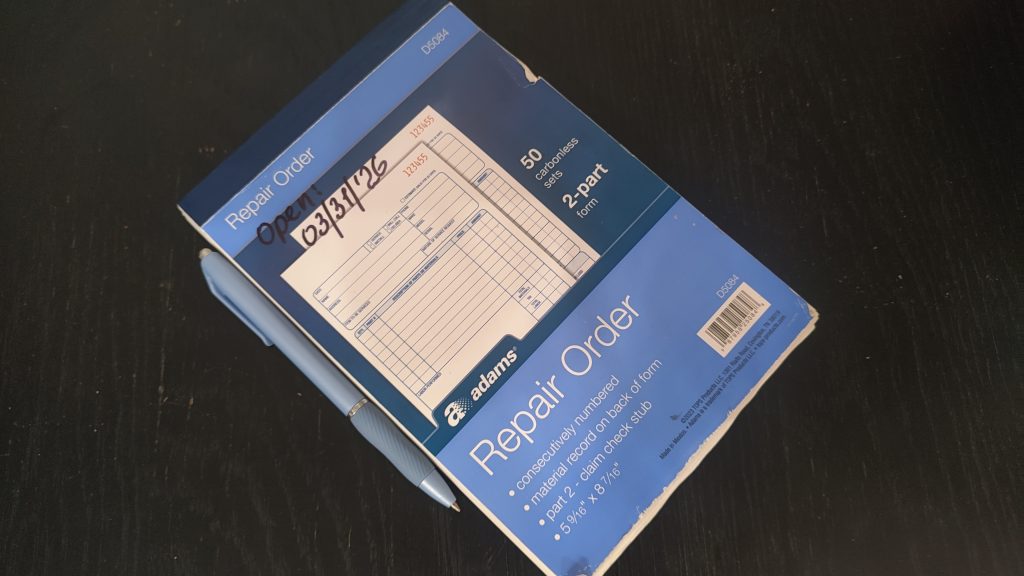
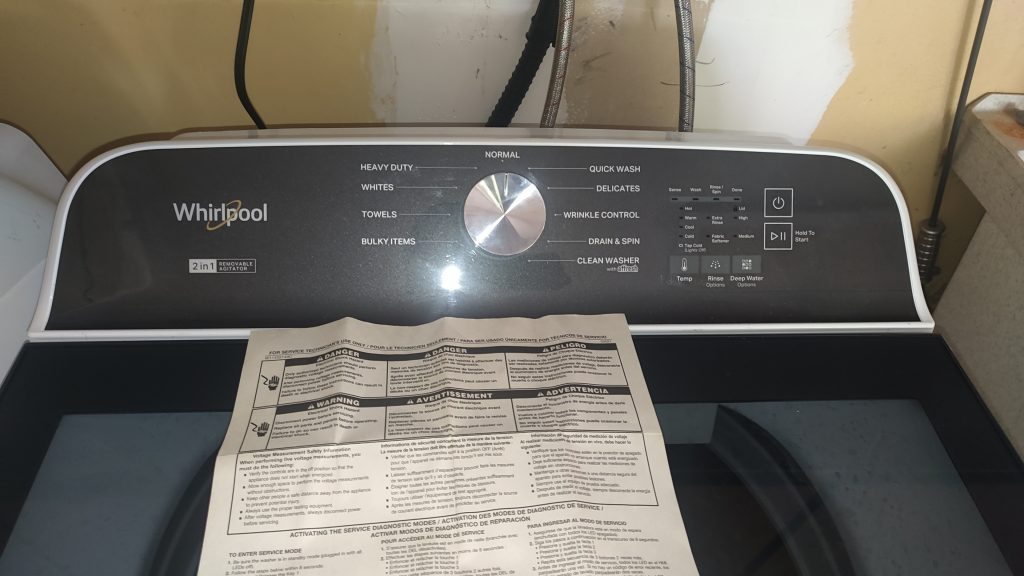
Whirlpool WTW6157PW0 F6E3 Error: Why This Washer Wouldn’t Fill
- Appliance: Whirlpool WTW6157PW0 top-load washer.
- Customer complaint: The washer started a cycle, would not fill with water, and stopped after about two minutes.
- Stored fault: F6E3 — Communication Error: ACU cannot hear MCU.
- Diagnosis: Water valves, pressure system, lid latch, agitation test, and spin test all passed individually. The clutch slider was then inspected because this Whirlpool platform is prone to a shifted slider ring.
- Cause found: The metal ring on the clutch slider had shifted out of position on its plastic base.
- Repair: OEM Whirlpool W10734521 slider replacement.
- Result: The washer filled, started its cycle correctly, and continued washing normally. The main control board was not replaced.
The code pointed toward the control board. The actual failure was in the drive.
The customer’s complaint was simple: the washer would start a cycle, fail to fill with water, and stop after about two minutes. Those are familiar symptoms in washer repair, but the cause in this case was not what the code first suggested.
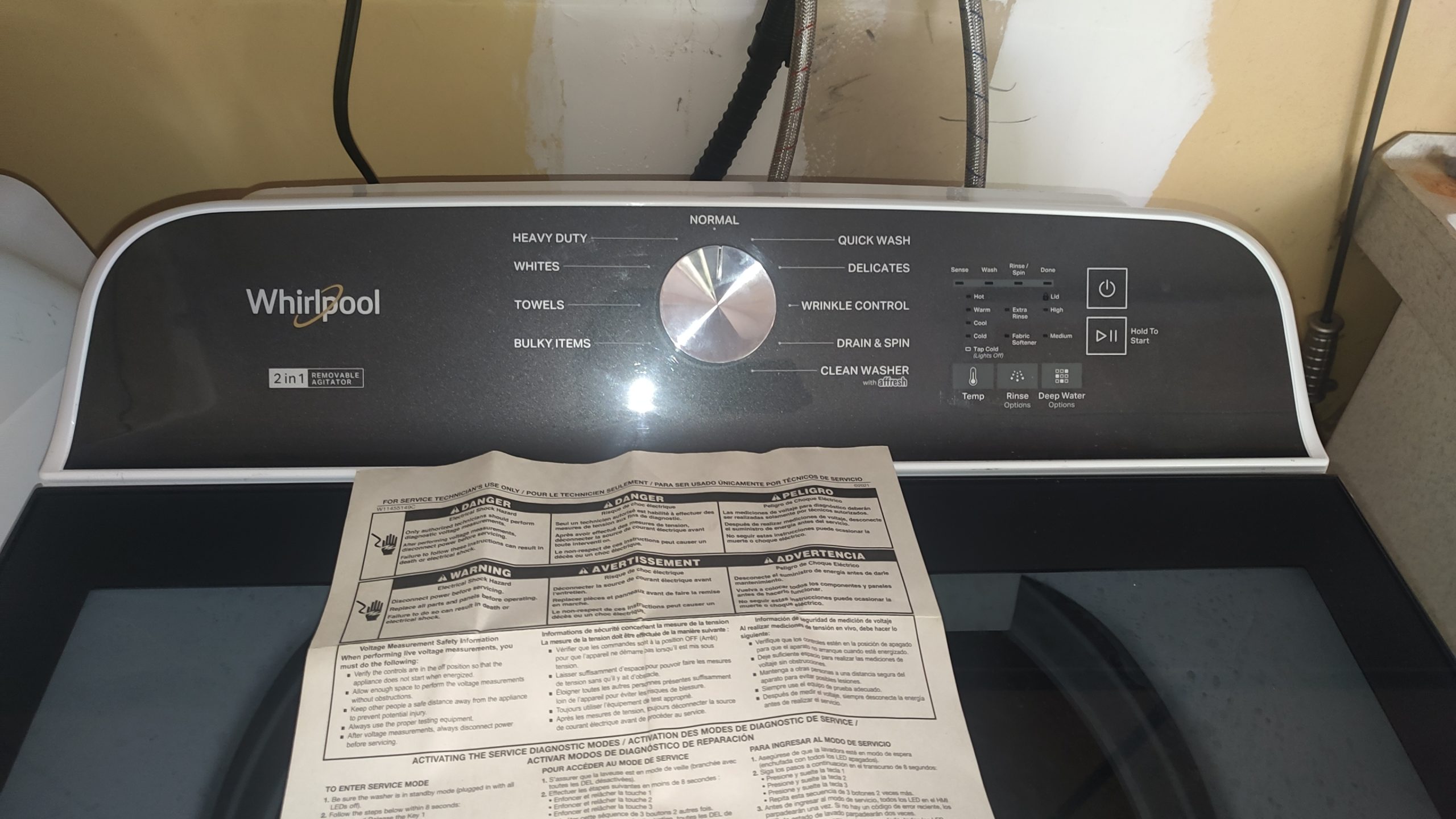
There was no normal error code displayed on the panel. In diagnostic mode, the washer showed this LED pattern:
W-R-L / R-D
The service sheet inside the washer included a fault-code chart, but it did not clearly explain how to convert that blinking pattern into a standard F and E code.
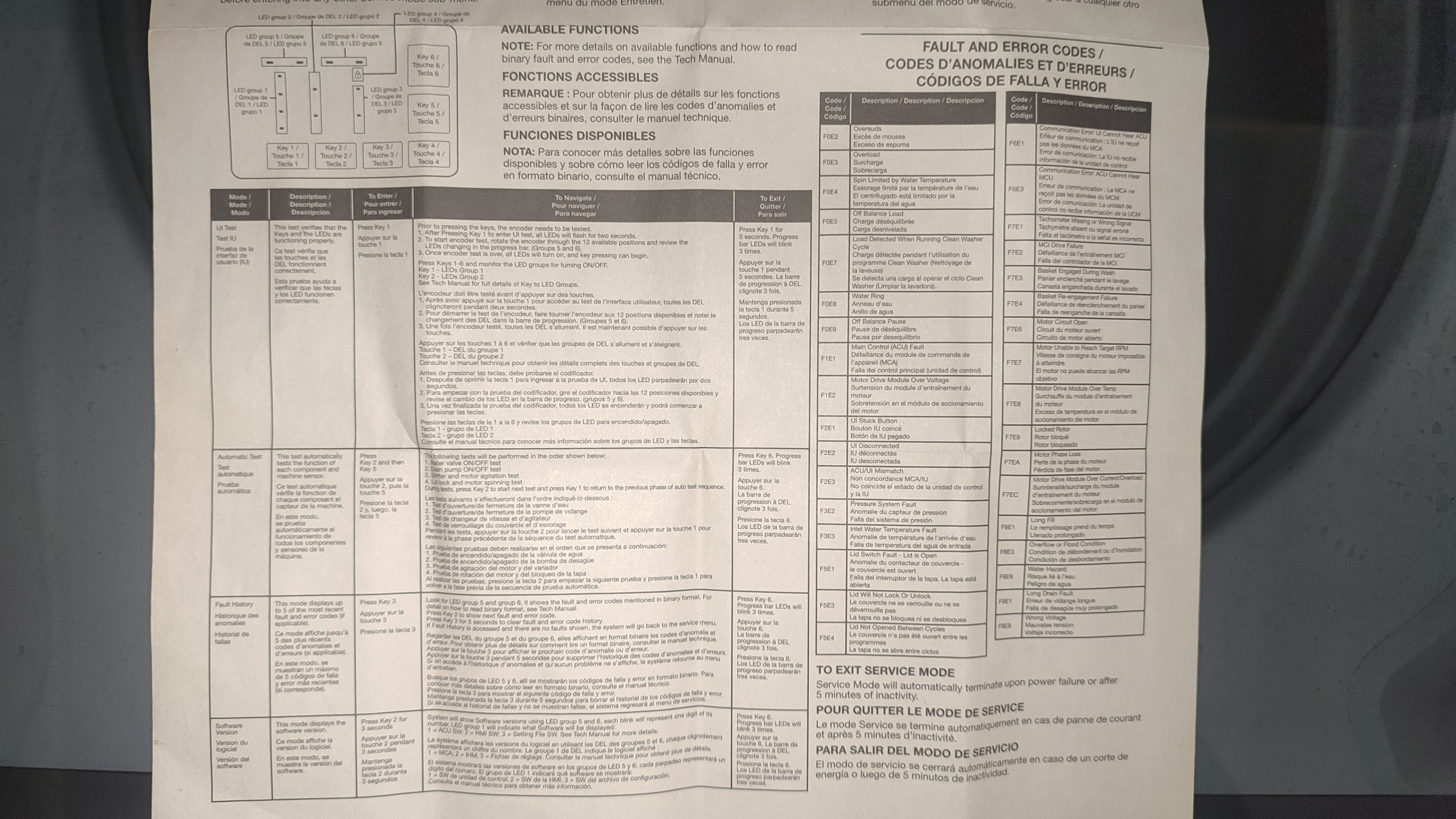
After decoding it, the stored fault was:
F6E3 — Communication Error: ACU cannot hear MCU.
In plain English, the main control was not seeing the motor-control signal it expected.
Diagnosis: Everything Pointed Toward the Main Control Board
I know these Whirlpool appliances and top-load washers well. On this platform, there is no separate standalone MCU board that you can simply pull out, test, and replace. So when a washer throws an MCU-related code, the main control board immediately becomes a serious suspect.
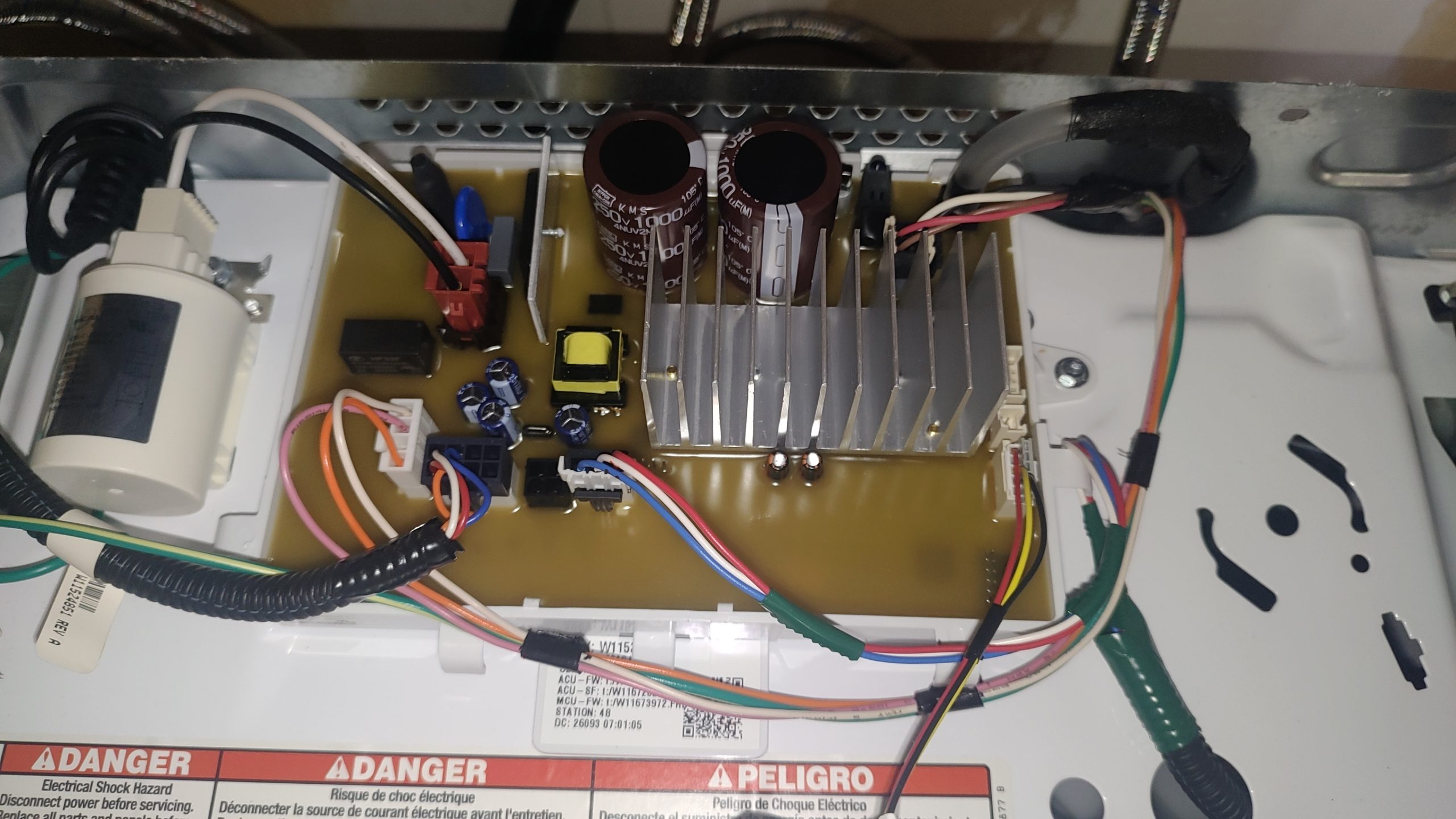
But a control board should not be condemned before the rest of the machine is checked.
I tested the water valves with direct power. I checked the pressure system in service mode. I checked the lid latch. Then I tested the drive system.
The washer passed both the agitation test and the spin test.
Individually, everything looked good:
- Water valves: working
- Pressure system: working
- Lid latch: working
- Agitation test: passed
- Spin test: passed
But during a real cycle, the washer would not move into a normal wash sequence. It would not fill, and it would stop with F6E3.
That is exactly the kind of case where many service companies order a main control board. I understand the logic. When individual components test properly but the machine behaves irrationally during a cycle, the board is often the next suspect.
But before putting an expensive control board on the customer’s bill, I always inspect the drive on these Whirlpool washers.
That is also how EasyFix handles pricing: diagnose first, explain what failed, and do not charge for parts the washer does not need. Our appliance repair pricing guide explains how service call, labor, and parts are handled before a repair moves forward.
The Actual Failure Was the Clutch Slider
Under the washer is the clutch slider, part of the drive system that helps the machine shift between wash and spin operation.
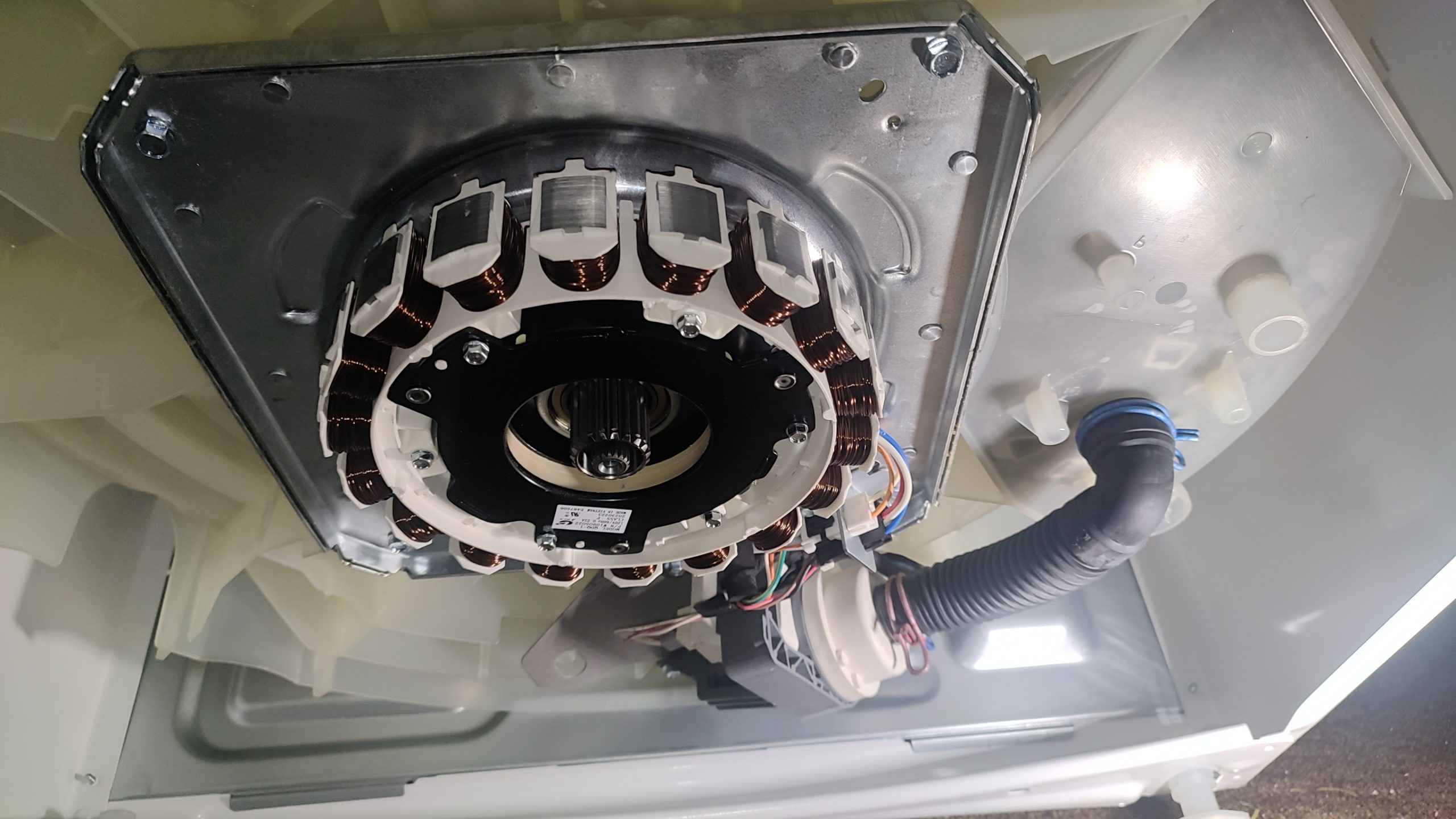
With the slider removed, the motor stator and center drive shaft are visible. The clutch slider installs here as part of the wash-and-spin drive system.
These Whirlpool washers have a known weak point here. The slider has a plastic inner base and a metal ring. That metal ring is not held tightly enough on the plastic base, and it can slide out of position.
That is exactly what happened on this washer.
I opened up the drive and found the metal ring had shifted off its proper position on the slider.
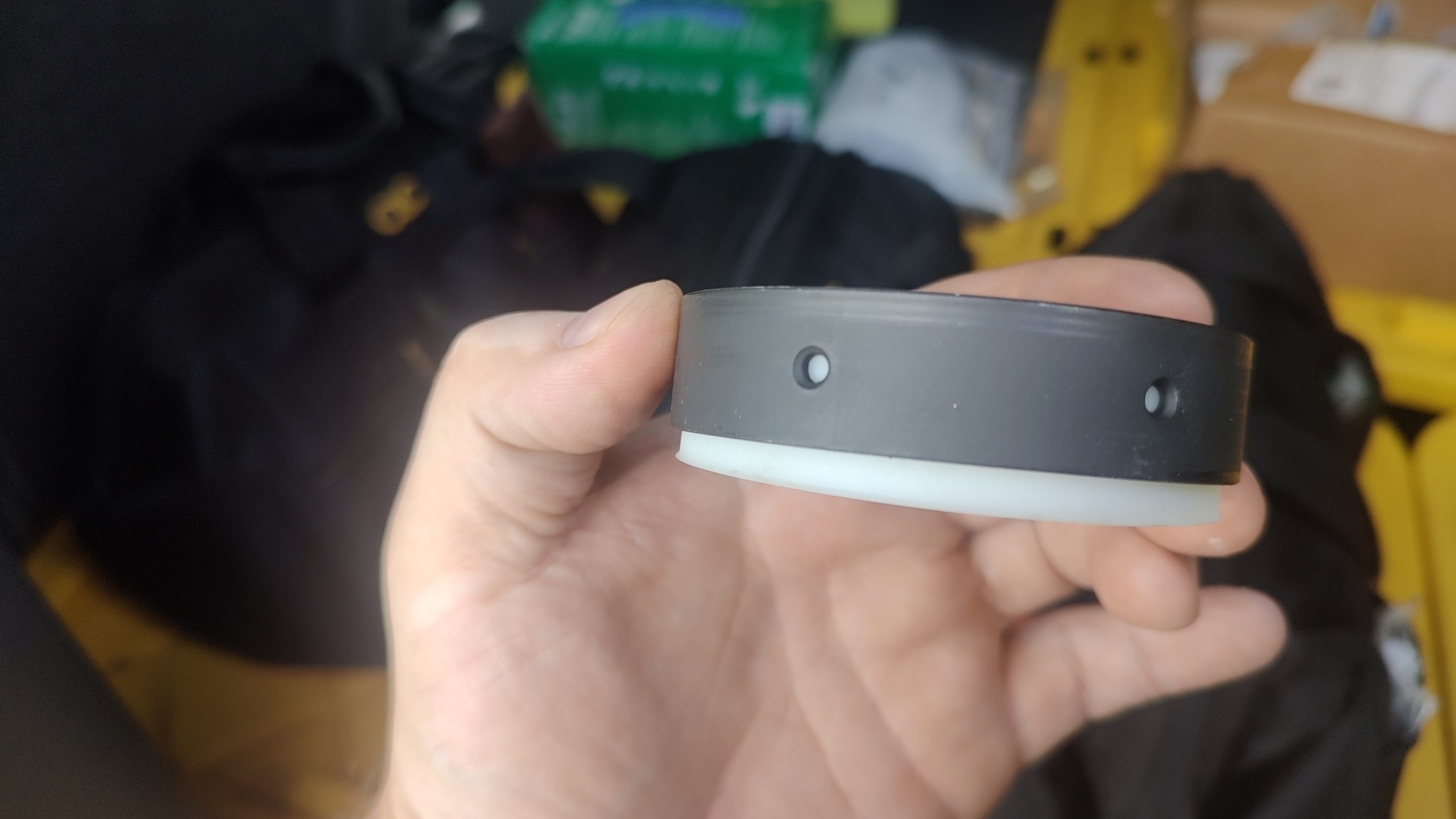
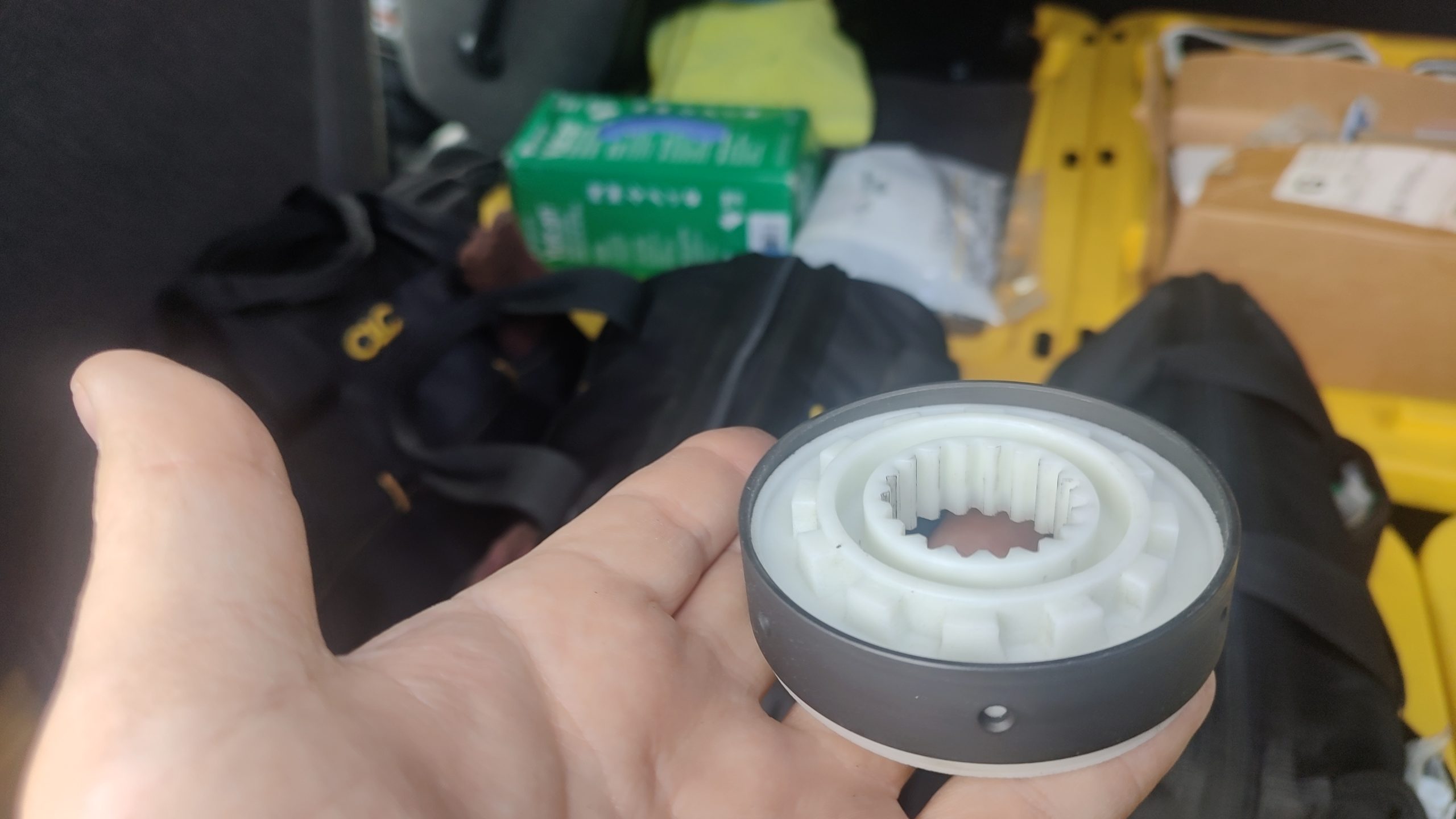
No failed motor.
No bad water valve.
No mystery electronic failure.
Just a shifted clutch-slider ring — a problem I have seen more than once on this Whirlpool platform.
After replacing the slider, the washer started its cycle correctly, filled with water, and continued washing normally. The replacement was an OEM Whirlpool W10734521 slider; we use OEM parts when they are the correct repair path, not as a reason to replace parts blindly. You can read more about that approach in our Whirlpool OEM parts and real diagnostics article.
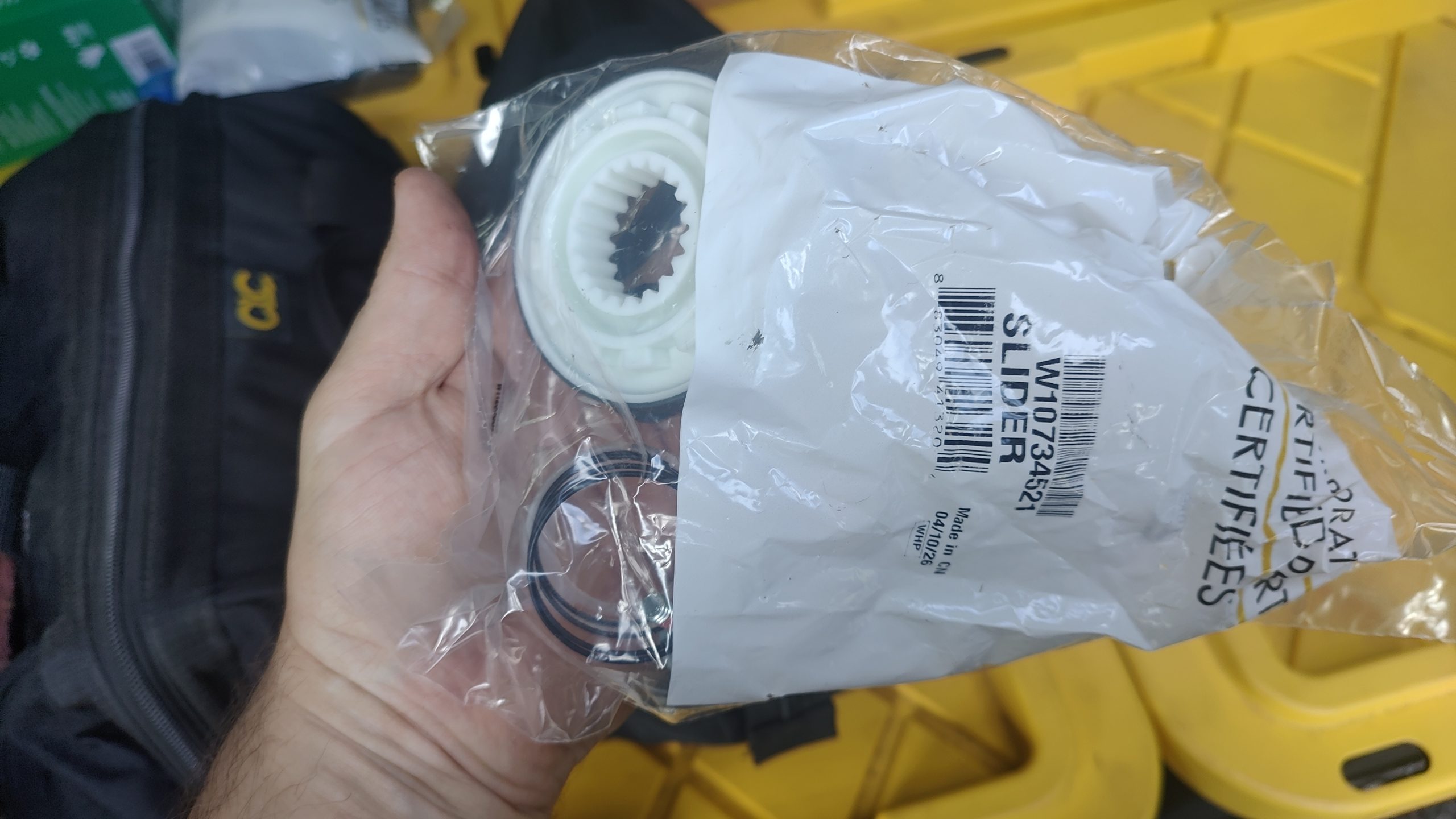
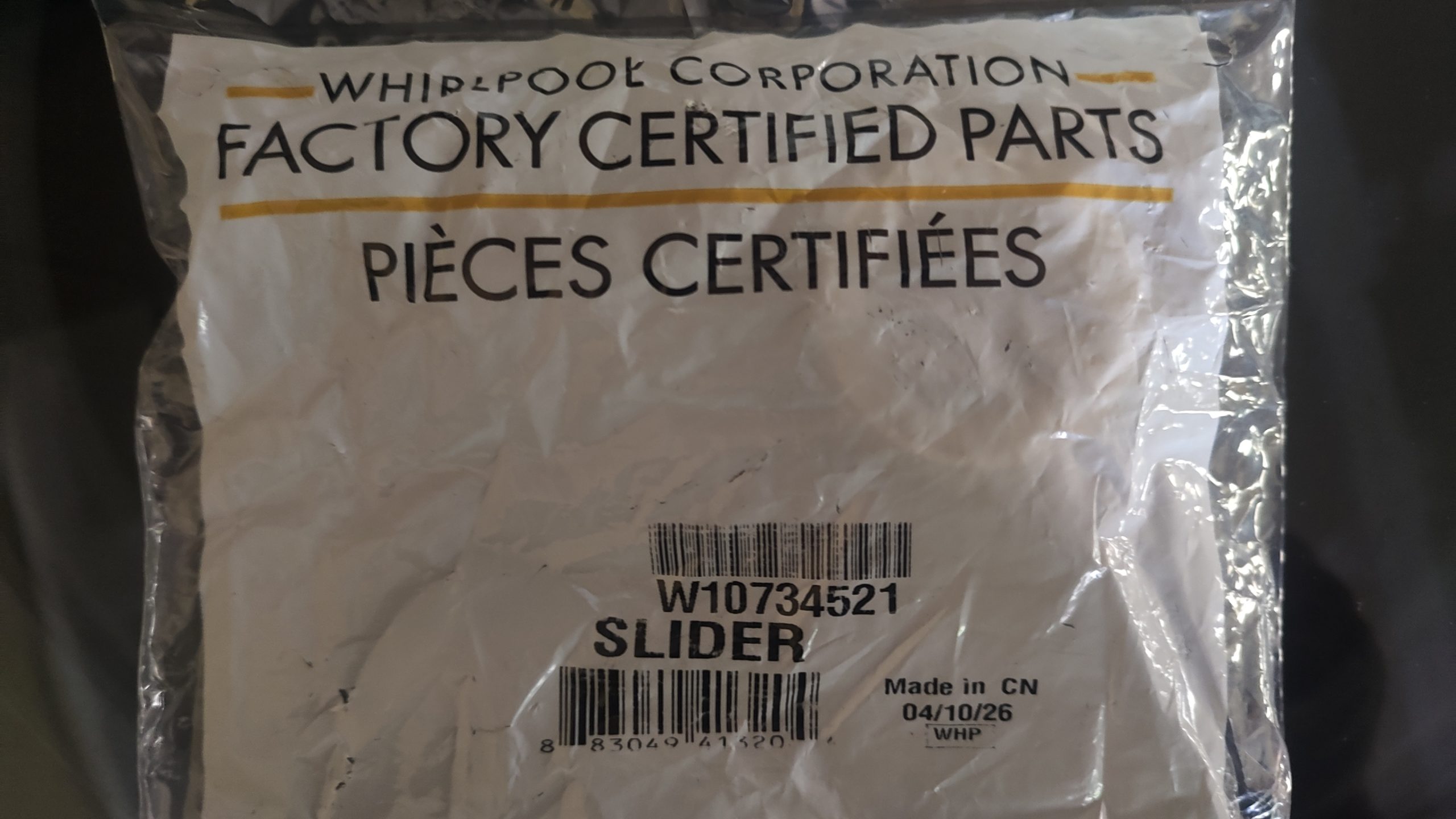
The main control board was not replaced.
The motor was not replaced.
The water valves were not replaced.
Why Did the Agitation and Spin Tests Pass?
I do not know.
I have worked on these Whirlpool washers long enough to know that, with this kind of slider failure, the machine should not have calmly passed both agitation and spin tests. It should have stopped the test and stored a fault.
But this washer passed both tests. Then, during a normal cycle, it refused to start washing properly and stored F6E3.
Whirlpool does not explain this in the service documentation. There is no clear answer for how a washer with this drive problem can pass individual drive tests but fail during an actual wash cycle.
So I am not going to invent a factory explanation that does not exist.
I found the shifted slider ring, replaced the failed part, and verified that the washer returned to normal operation. That is the repair that matters.
Final Result
F6E3 strongly pointed toward the electronics and the main control board.
The actual cause was mechanical: the metal ring on the clutch slider had shifted out of position.
An error code is a direction for diagnosis. It is not a verdict on a part.
For broader symptoms such as a washer that will not fill, stops mid-cycle, drains on its own, or will not spin, see our washer problems and solutions guide. This specific repair is one F6E3 case, not a universal answer for every Whirlpool washer.
Related Washer Diagnosis Cases
Real repair cases are useful when they show the diagnosis, not just the final part. For another example where a control board was not the answer, read Washer Keeps Draining on Its Own: The Real Fix Without Replacing a Board. More documented EasyFix repair cases are available in the repair blog.
Whirlpool Washer Repair Coverage
EasyFix handles scheduled Whirlpool washer repair routes across Clark County, Cowlitz County, and the Portland Metro Area. Coverage depends on route, schedule, and the repair needed; see our service areas for the current coverage map.
Whirlpool WTW6157PW0 F6E3 Error FAQ
Does F6E3 always mean the main control board is bad?
No.
In this case, F6E3 made the main control board look very suspicious, especially because the other components passed their tests. But the drive system and clutch slider still needed to be checked before replacing an expensive board.
How did you decode the blinking error code?
The service sheet showed the W-R-L / R-D blinking pattern, but it did not clearly explain how to read that pattern as an F and E code.
I used ChatGPT as a research tool to help connect the LED pattern with F6E3.
But ChatGPT by itself probably will not fix your washer. It cannot see the machine, listen to the drive, test the valves, run service mode, or take the bottom of the washer apart.
The useful part was the combination: technician experience, hands-on testing, and a research tool that helped point me in the right direction.
The diagnosis was confirmed on the washer itself, not inside a chat.
I read the article, but why did you decide to inspect the clutch slider?
Honestly, it was about 50% experience and 50% luck.
First, I saw an error related to the motor and motor-control system. But I know these Whirlpool washers: there is no separate MCU board sitting inside that I can simply inspect or replace.
Second, I know these washers are prone to clutch-slider problems.
Third, this was a 2024 washer. I wanted to look underneath and see whether Whirlpool had changed anything. Maybe there was a different design. Maybe there was a new component. Maybe there was something I had not seen before.
I opened the drive and immediately found the shifted slider ring.
You can call that luck. But luck, as they say, favors the prepared.
Can I reset the error by unplugging the washer?
You can try.
Disconnecting power may temporarily clear the stored fault. But if the washer is monitoring a discrete contact or another condition that is still incorrect, the code will return.
The next time the washer starts a cycle, it will see the same wrong condition and store the fault again.
Unplugging the washer cannot put the shifted metal ring back where it belongs.
The EasyFix team 🤝
No Upsells. No Nonsense. Just Honest Work.