
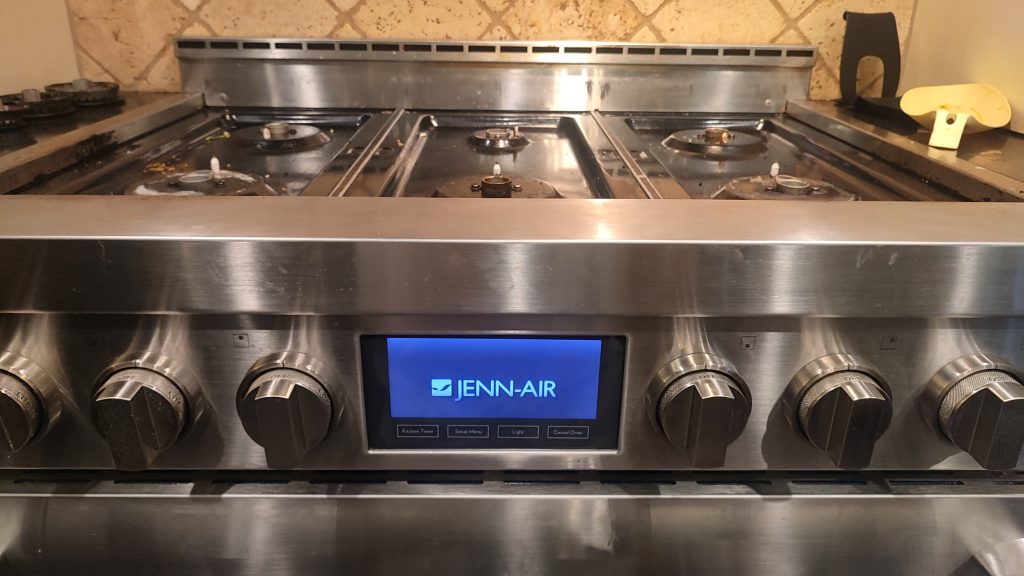
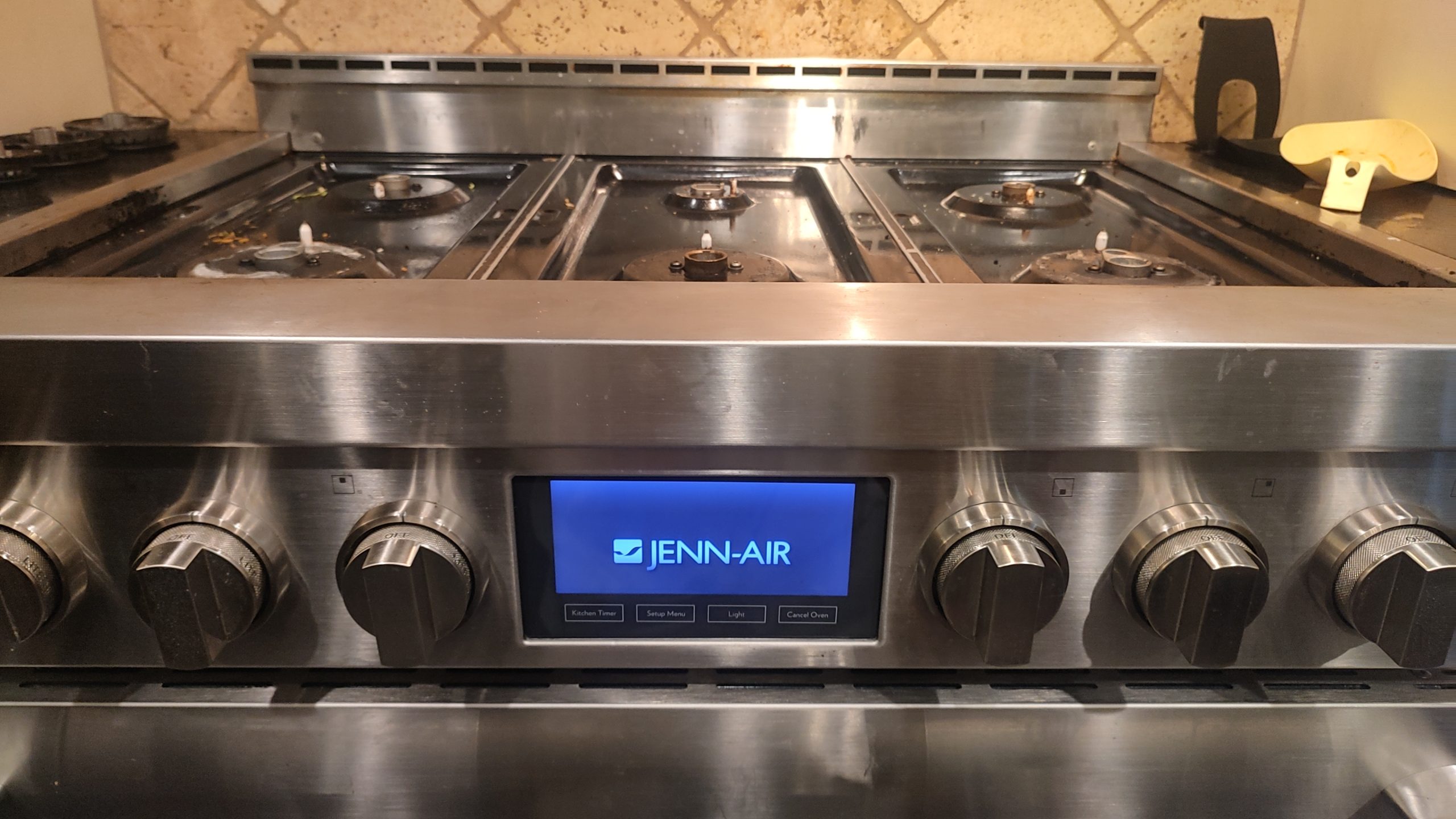
- Appliance: JennAir gas range, model JGRP436WP01.
- Customer complaint: The oven would stop working when a pan was used on the right burner.
- Diagnosis: Heat-damaged insulation and a low-voltage power supply board sitting in the affected front control area.
- Part replaced: Low-voltage power supply board WPW10145531.
- Repair: Board replacement and relocation within the control area, away from the heat-damaged pocket and closer to cooling airflow.
- Location: Vancouver, WA.
- Result: Oven control operation stayed stable during final testing under the same type of burner-and-cookware condition.
This was not a normal “oven not heating” call. The complaint sounded strange at first: When a pan was placed on the right burner, the oven would stop working. Not when the oven was in self-clean. Not every time the oven was turned on. Not just a dead display.
The problem showed up when the right cooktop burner was used with cookware. This repair was completed on a JennAir gas range in Vancouver, WA.
Appliance: JennAir gas range
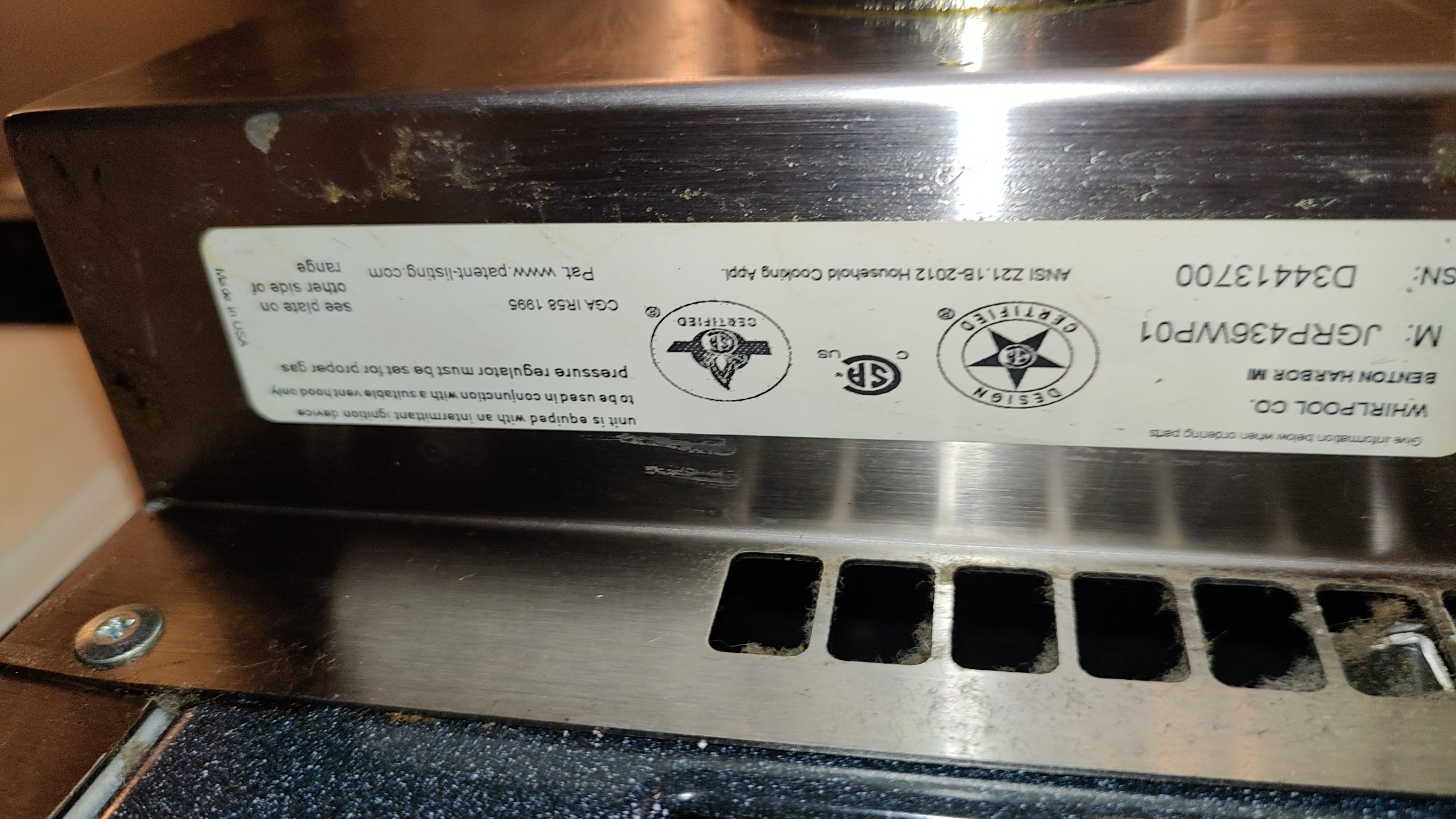
Model: JGRP436WP01
Serial Number: D34413700
Manufacturing Date: October 2013
The Symptom Sounded Strange, but the Pattern Was Real
A pan on a burner should not directly control the oven. But in repair work, the pattern matters. The customer was describing a repeatable condition: right burner, cookware, then oven control trouble. A pan can change how flame and hot air move around a cooktop. Instead of heat moving normally upward, the pan can push more heat toward the front edge of the range. On this JennAir range, that heat was being pushed toward the front-right control area. That is where the repair started making sense.
What We Found Behind the Front Panel
After opening the front panel area, the problem was no longer a mystery. Behind the front panel, high on the right side, there was a low-voltage power supply board for the oven control system.
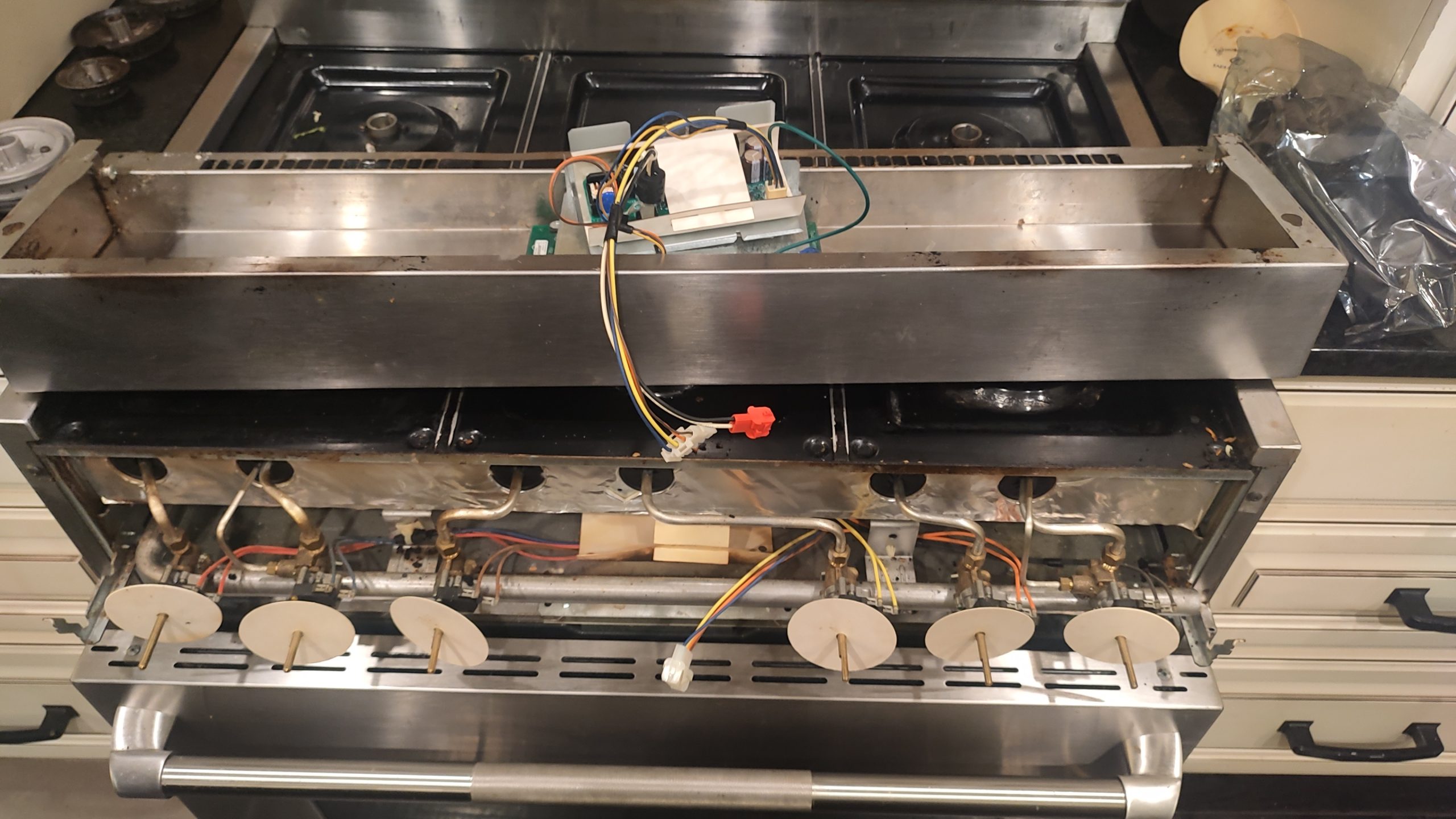
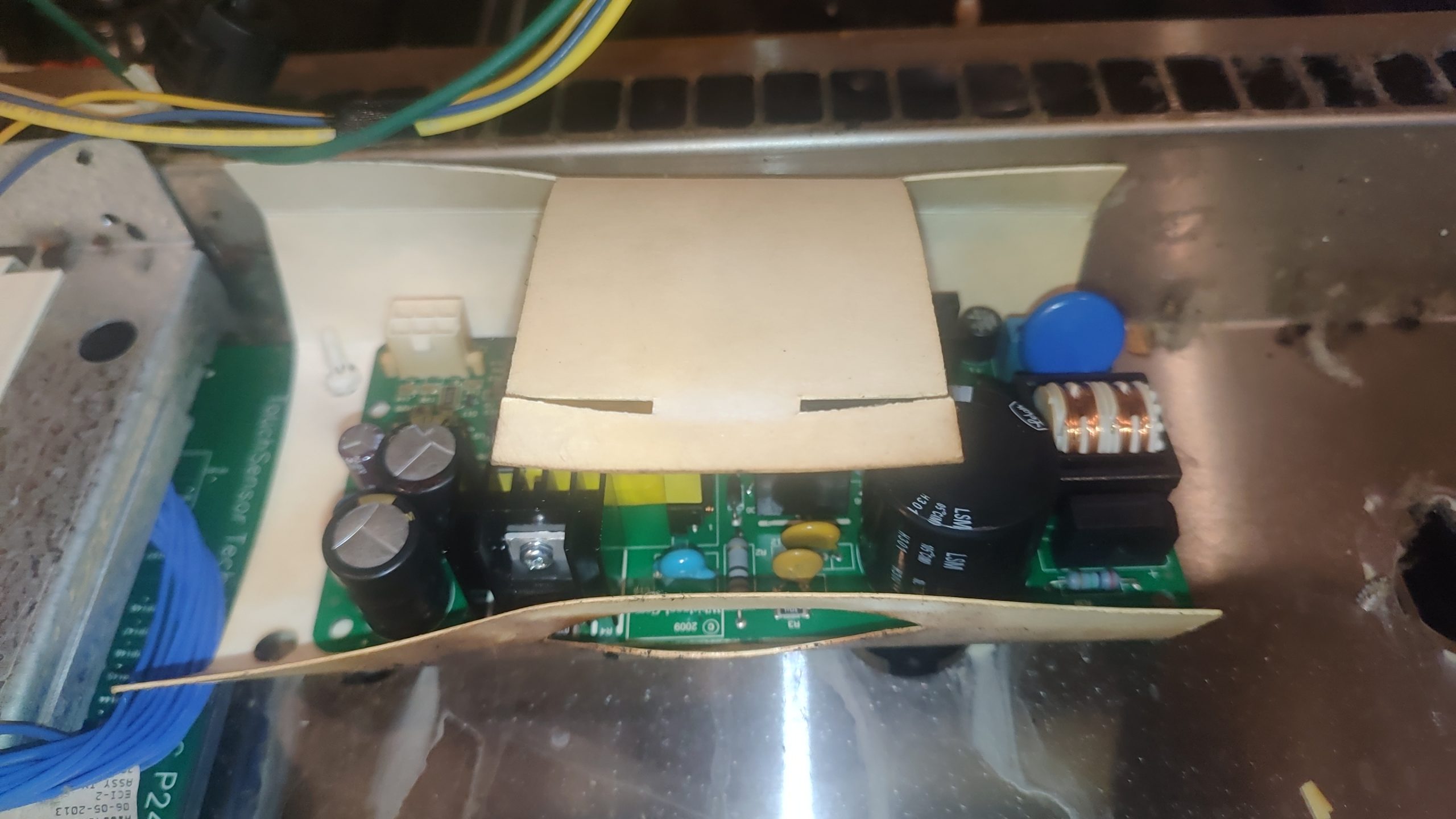
The insulation near that area was heat-damaged. The board had also been sitting in that same heat-affected area.
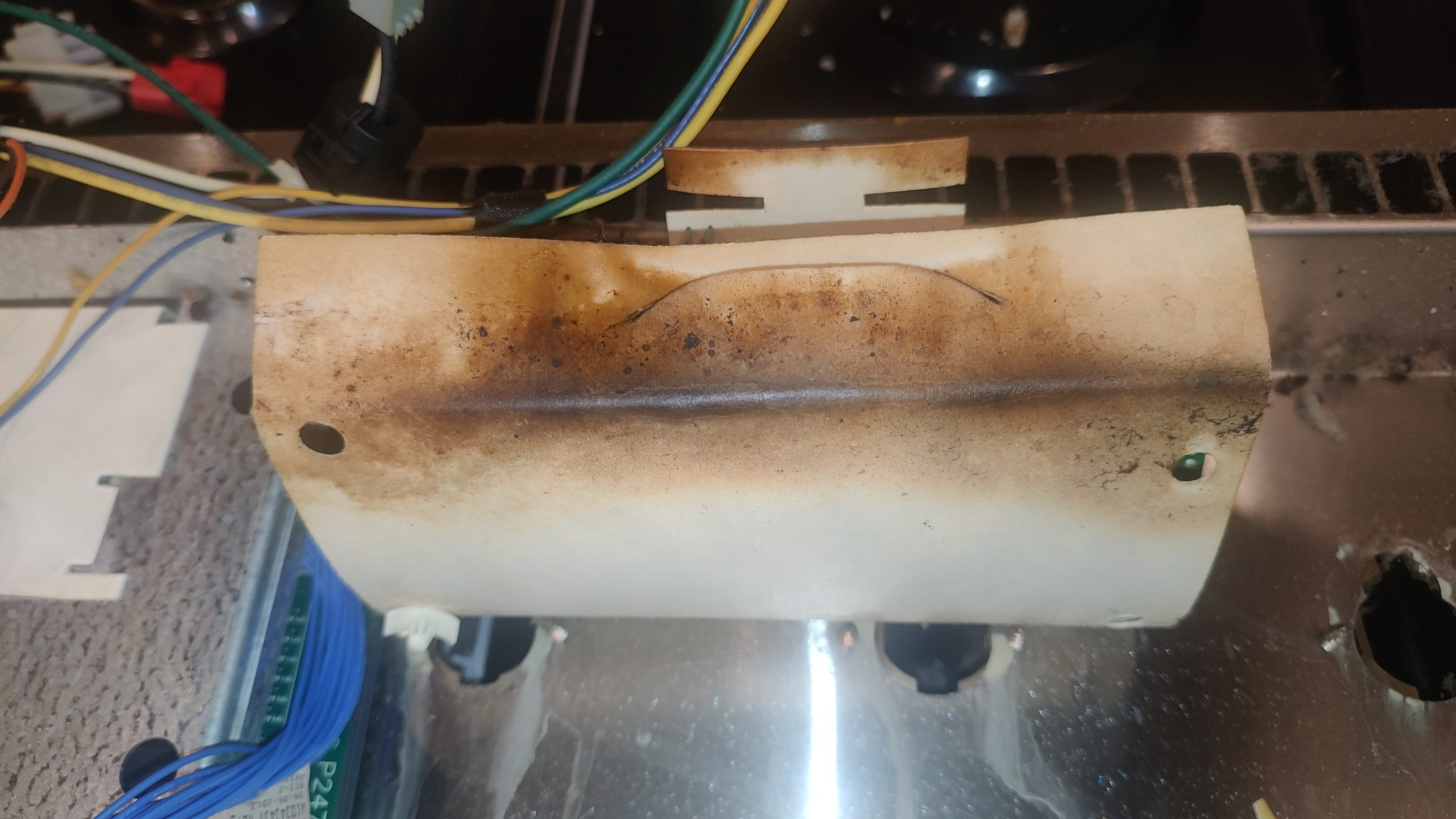
That matched the complaint. When the right burner was used with a pan, the heat path changed. More heat reached a weak spot behind the front panel, and the oven control system became unstable. This was not a case where the right burner was bad. The burner simply exposed the real problem.
Why We Did Not Just Guess at the Main Oven Control Board
It would have been easy to say, “bad control board,” replace the main oven control, and hope. That is not diagnosis. The physical evidence pointed somewhere else:
- heat-damaged insulation
- board location near the heat path
- repeatable symptom tied to the right burner and cookware
- oven control instability when that area was heated
The failed part was the low-voltage power supply board, not a random main oven control board guess.
The Part Replaced
The failed board was replaced with: Low-Voltage Power Supply Board — WPW10145531.
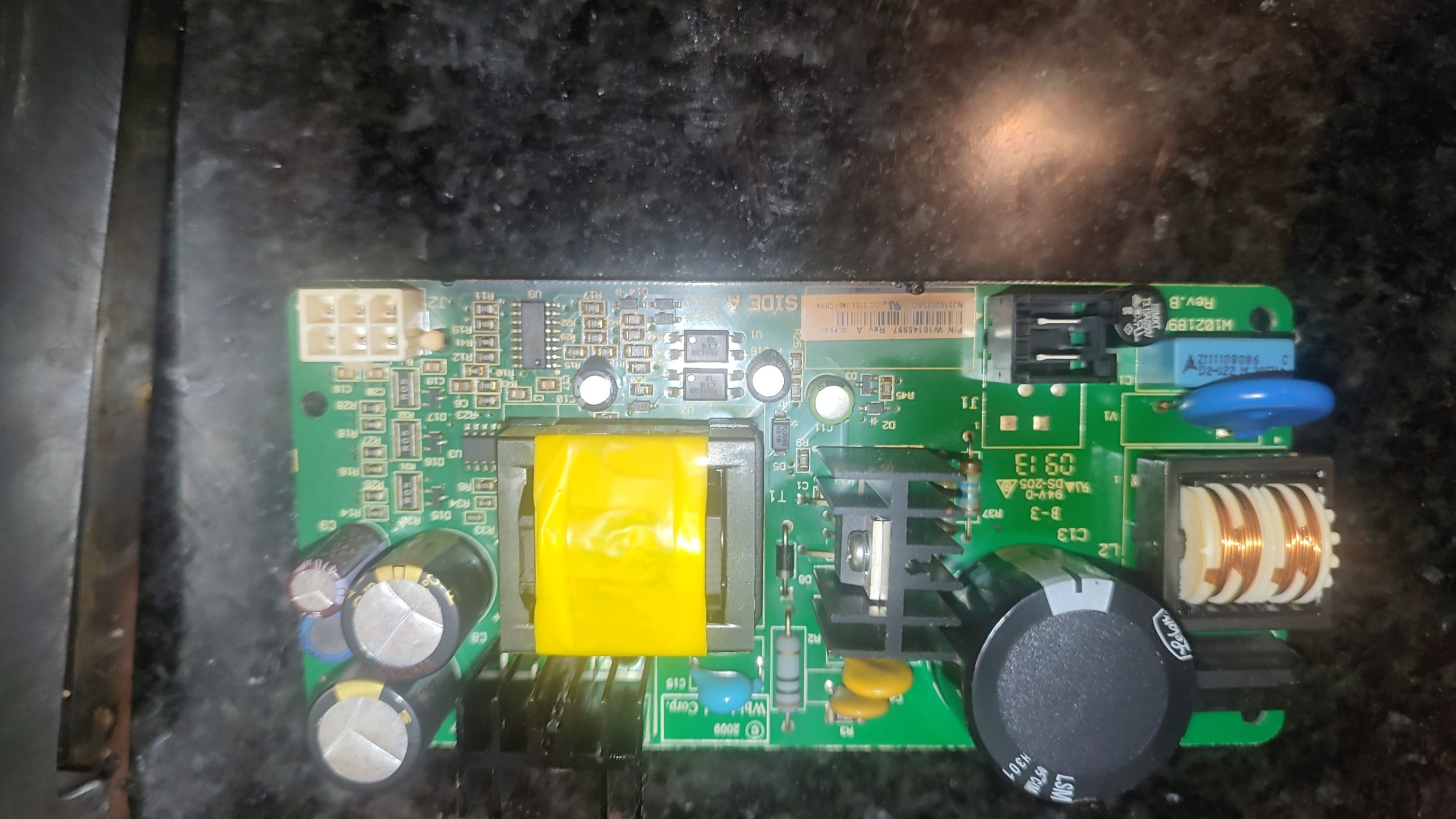
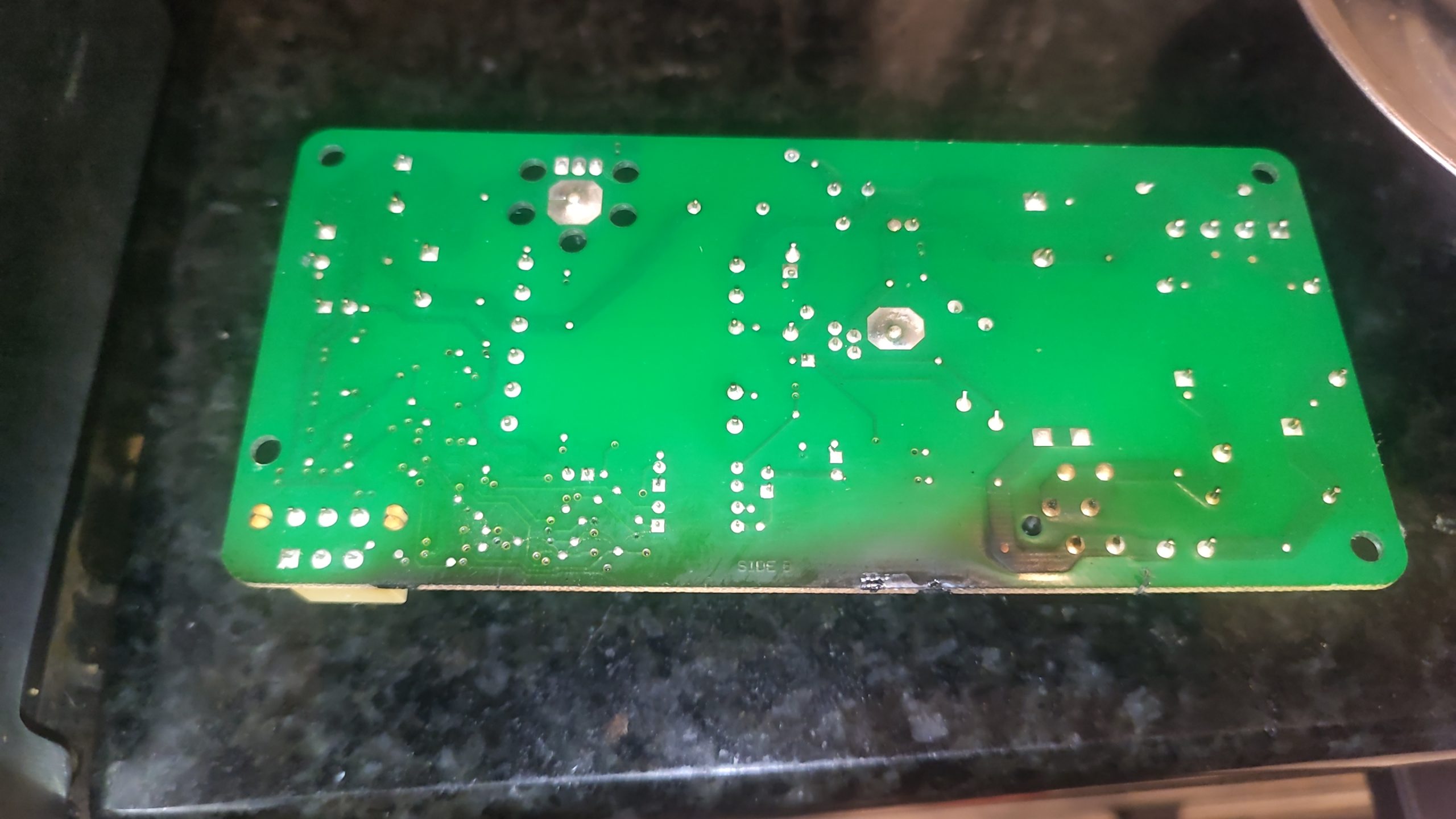
The old board was removed and discarded. The new board was not put back into the same heat-damaged pocket. That would not have made much sense. The old location already showed why the board failed.
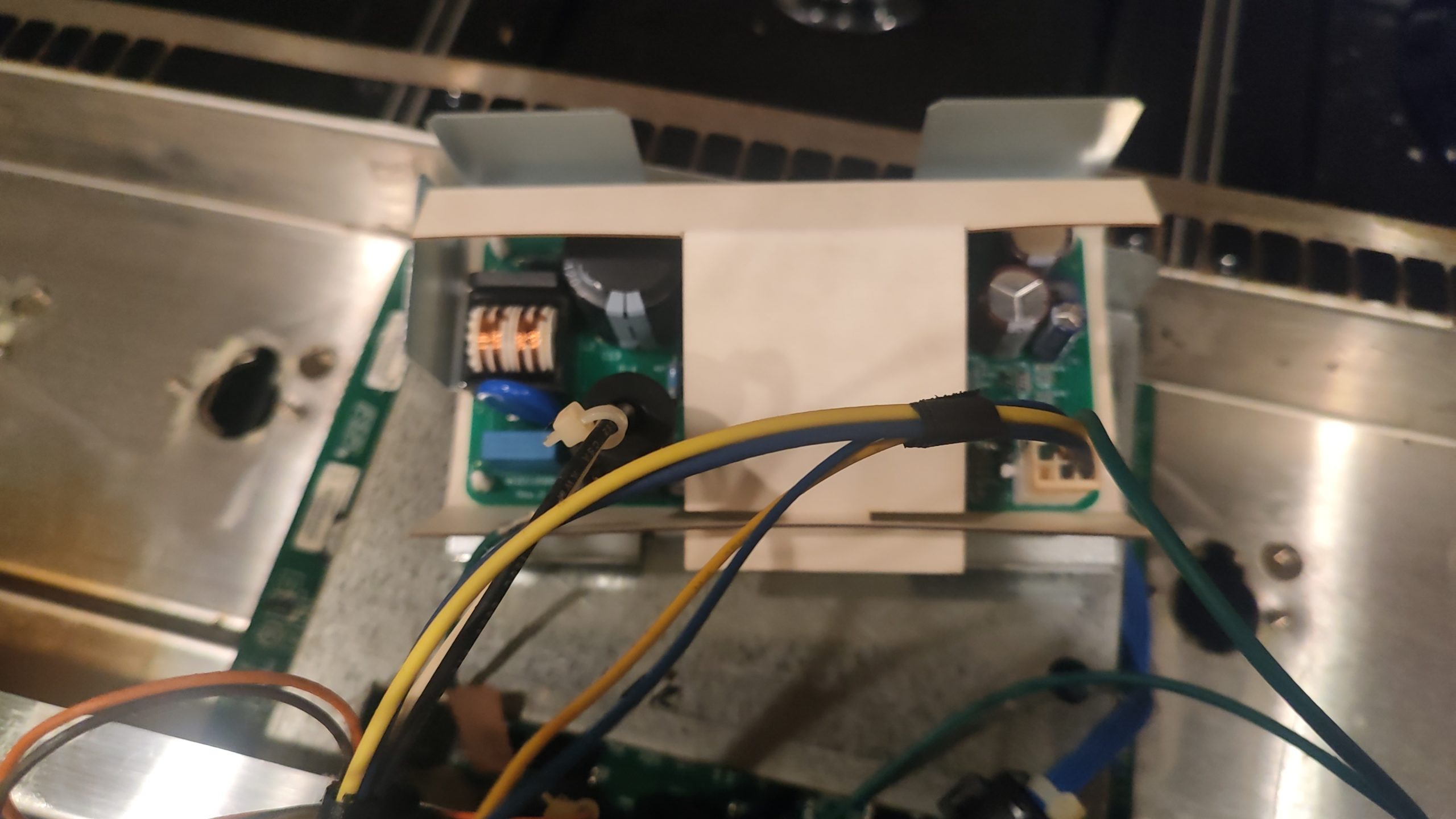
Instead, the replacement board was installed within the front control area, using the available wiring length, in a location that made more sense: away from the damaged heat path and closer to cooling airflow.
This was not guesswork. It was a repair decision based on what the range showed us.
Why the Board Was Relocated
Putting a new board back into the same bad spot would have been setting the customer up for the same problem again. The new board was placed near the high-limit thermostat area. That does not magically make the area “perfect,” but it gave a useful reference point: this area is part of the oven’s temperature protection design.
The second important point was airflow. The new board was positioned above the cooling fan airflow housing, instead of being left in the same hot dead zone. There was also a good comparison nearby: the oven UI board was about an inch from the new board position, and it did not show heat damage. That mattered.
I have seen similar control-area layouts in other appliances. This was not “inventing the wheel.” It was using a better layout that already makes sense: keep the board in the control area, keep it within safe wire reach, and keep it out of the heat-damaged pocket.
Repair Cost at the Time of Service
At the time of this repair, the approved cost was:
- Low-voltage power supply board WPW10145531: $249.58
- Labor: $220.00
- Subtotal: $469.58
- Sales tax: $40.85
- Total amount: $510.43
This amount reflects this specific repair case. Final repair cost can change depending on part price, part availability, shipping, tax, and the exact appliance model.
Final Test
After the new board was installed and relocated, the range was reassembled and tested. For this repair, “the display turns on” was not enough. The original complaint happened under a specific cooking condition, so the range had to be checked under a similar condition: right burner use with cookware and stable oven control operation afterward. That is the difference between replacing a part and actually confirming the repair.
Need JennAir Range Repair in Vancouver, WA?
If your range has a strange, repeatable problem, the first step is not guessing at parts. The first step is finding the pattern and proving what actually failed. For local service, visit our Vancouver appliance repair page. For oven problems, see our oven repair service page. For burner, cooktop, stove, or range issues, see our stove and range repair service page.
If you are trying to understand whether a repair makes sense, read our EasyFix appliance repair pricing guide. You can also check our service areas or browse more real repair cases in the EasyFix repair blog. No upsells. No guessing game. Just a clear diagnosis and an honest repair plan.
Final Takeaway
This JennAir range did not have a simple oven failure. The oven shut off when the right burner was used with a pan because the cookware changed the heat path. That heat reached a low-voltage power supply board that had already been affected by heat exposure. The repair was not just “replace the board.” The repair was to replace the failed WPW10145531 board and not put the new one back into the same bad conditions.
Sometimes the right repair is simple: find the failed part, understand why it failed, and do not repeat the same mistake with the new part.
More Real Oven and Range Repair Cases
For another real oven repair in Vancouver, WA, read our ZLINE RA30 oven not heating repair case. You can also browse more real appliance repair stories in the EasyFix repair blog.
JennAir Range Repair FAQ
Why did the oven shut off when the right burner was used?
The burner was not controlling the oven directly. When a pan was placed on the right burner, the cookware changed the direction of heat and hot air. That heat moved toward the front-right control area, where the low-voltage power supply board was located. The board and nearby insulation had already been affected by heat, so the oven control system became unstable under that condition.
Was the right burner bad?
No. The right burner was not the failed part. It created the heat condition that exposed the real failure. The failed component was the low-voltage power supply board.
What part was replaced?
The replaced part was the low-voltage power supply board, part number WPW10145531.
Why did the board become sensitive to heat?
Electronic boards do not always fail cleanly all at once. Sometimes heat exposure makes them unstable first. In this case, the board was located near a heat-damaged area behind the front panel. When that area got hotter during right burner use, the oven control system became unstable.
Do you ever relocate a component from the factory position?
Yes, when the failure evidence supports it. With experience, you start seeing better layouts used in other appliances and other appliance series. There is no need to “invent the wheel” when a better layout already exists. In this JennAir range, the new board was not moved randomly. It was installed in a control-area location that made more sense: near cooling airflow and near other electronic components that did not show heat damage.
Where exactly was the board relocated?
The board was relocated near the high-limit thermostat area. The high-limit thermostat is the safety thermostat that shuts the oven down if overheating occurs. That was one useful reference point. The second advantage was that the new board location was above the cooling fan airflow housing, instead of sitting in the same hot pocket. Another important point: the oven UI board was located about one inch from the new board position, and that UI board did not show heat damage. Before installing the board there, the available space, cooling path, and wire length were checked.
Could this problem be solved without opening the range and replacing the board?
Not as a real repair. You can imagine temporary ideas: using a smaller burner, reducing the heat load, placing a metal plate on top of the panel as a heat reflector, or using heat-resistant material like what welders use. I would only look at ideas like that as temporary measures. They might help someone wait for service or wait for the needed part, but they are not a replacement for diagnosis and repair.
Why not just replace the main oven control board?
Because that would have been guessing. The evidence pointed to the low-voltage power supply board: the location, the heat-damaged insulation, the heat exposure, and the repeatable symptom when the right burner was used with cookware. Replacing the main oven control board “just in case” would not be honest diagnosis.
Can a damaged board like this be repaired instead of replaced?
In normal appliance repair, this type of board is usually replaced as an assembly. Even if one damaged component can be found, the board has already been exposed to heat. The customer needs a reliable range, not an experiment on a heat-damaged board.
Why was the final test important?
Because the symptom was not just “no power” or “oven dead.” The problem appeared under a specific cooking condition. After the repair, the range had to be checked under similar conditions to make sure the original complaint was gone.
Is this a common JennAir problem?
I would not call it common without real failure-rate data. This is a real repair case where board location, damaged insulation, and heat movement from the burner created an unusual oven control failure. That is why diagnosis mattered.
The EasyFix team 🤝
No Upsells. No Nonsense. Just Honest Work.
📍 Serving Clark & Cowlitz Counties and the Portland Metro Area


