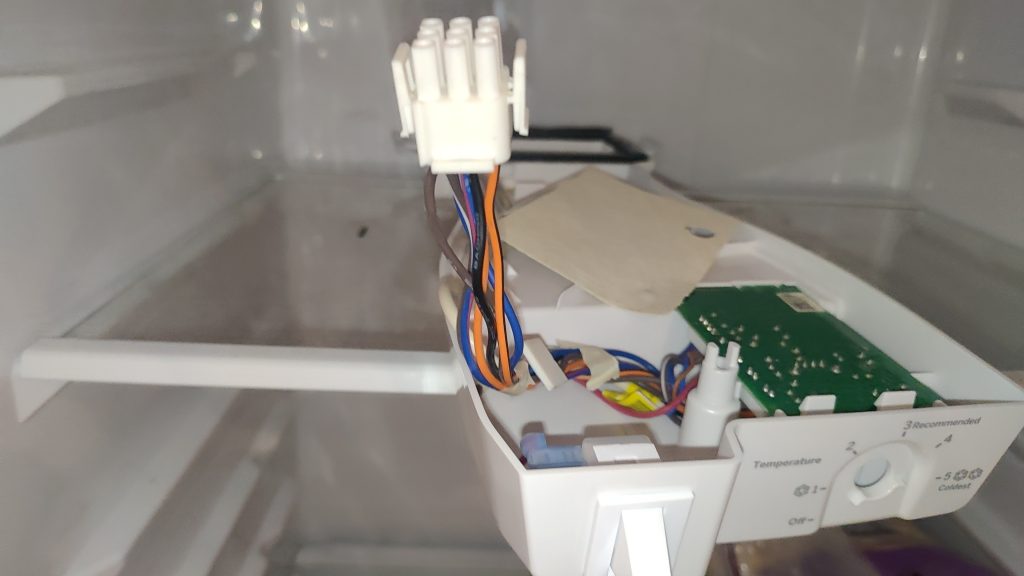
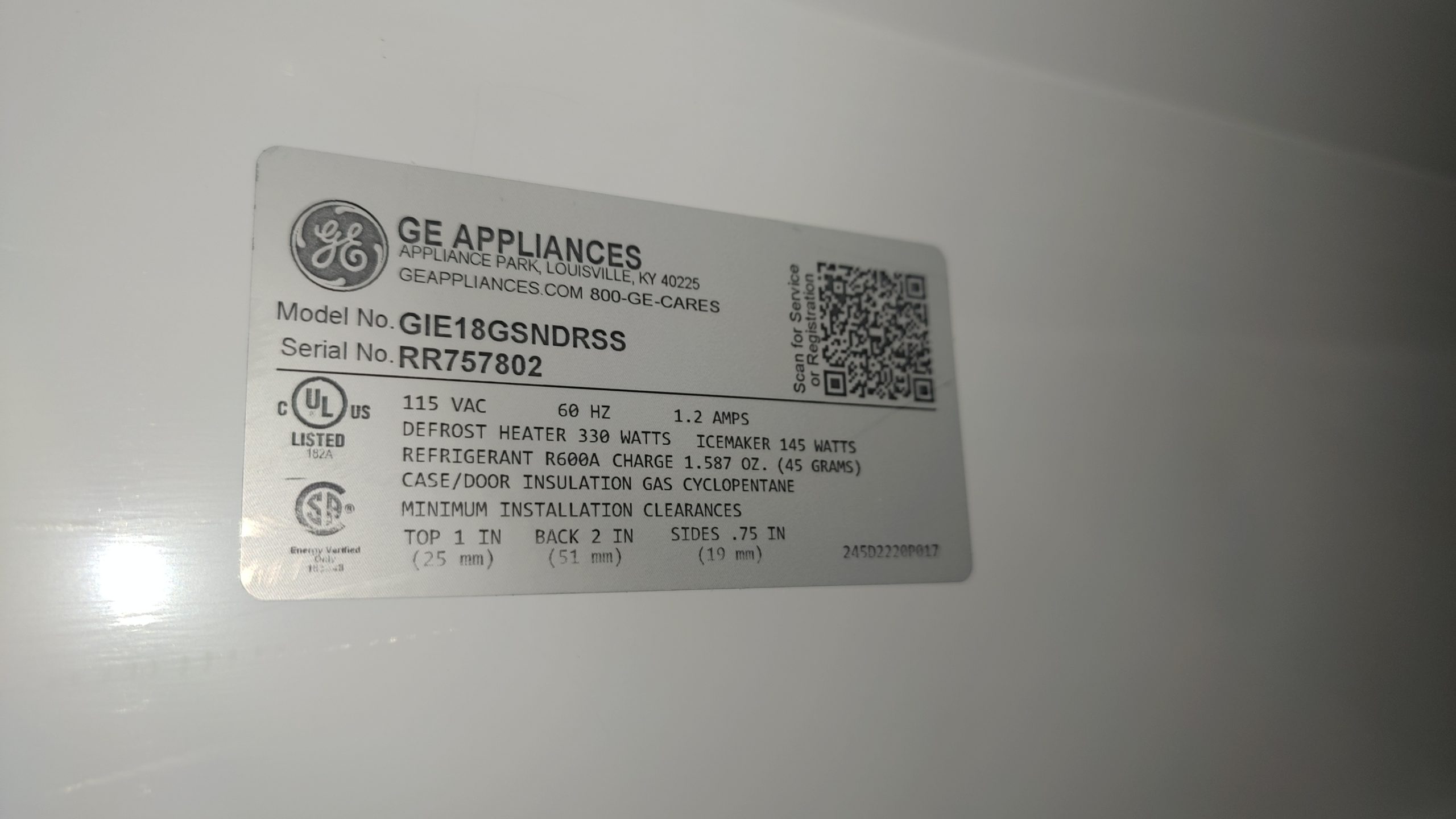
This GE refrigerator, model GIE18GSNDRSS, looked as if someone had unplugged it from the wall.
There was no interior light.
The controls were dead.
The compressor would not start.
Power was reaching the refrigerator, but it was being lost somewhere inside the cabinet.
The actual failure was a broken brown power wire near a hidden connector inside the insulated divider between the freezer and fresh-food compartments.
The wire itself cost almost nothing. The real work was finding where power was being lost, reaching a connection buried inside the cabinet, and restoring the refrigerator after the repair.
Repair Summary
-
Appliance: GE top-freezer refrigerator
-
Model: GIE18GSNDRSS
-
Main symptom: No lights, no controls, and no compressor operation
-
Failure: Broken brown power wire
-
Location: Hidden connector inside the divider between the freezer and fresh-food compartments
-
Repair: Opened the divider and routed a new dedicated wire around the failed section
-
Cabinet restoration: Rebuilt the connector insulation, thermal insulation, and interior plastic panel
-
Result: Interior light returned, controls powered up, compressor started, and the refrigerator resumed normal operation
Why a Hidden Wire Break Is So Difficult to Locate
Confirming that power is being lost somewhere in a circuit is one thing.
Finding the exact location of a broken conductor inside a foamed-in refrigerator cabinet is much harder.
The harness entered the cabinet near the compressor at the rear of the refrigerator. The other connector was located inside the refrigerator compartment. The entire section between those two points passed through a closed, insulated structure.
Before opening the cabinet, there was no practical way to test every conductor end to end:
-
One connector was behind the refrigerator near the compressor.
-
The other connector was inside the cabinet.
-
The harness between them was buried in foam.
-
There was no intermediate service access.
The testing showed that power was not reaching the internal components. It did not show exactly where the conductor had failed.
The Refrigerator Gave One Critical Clue
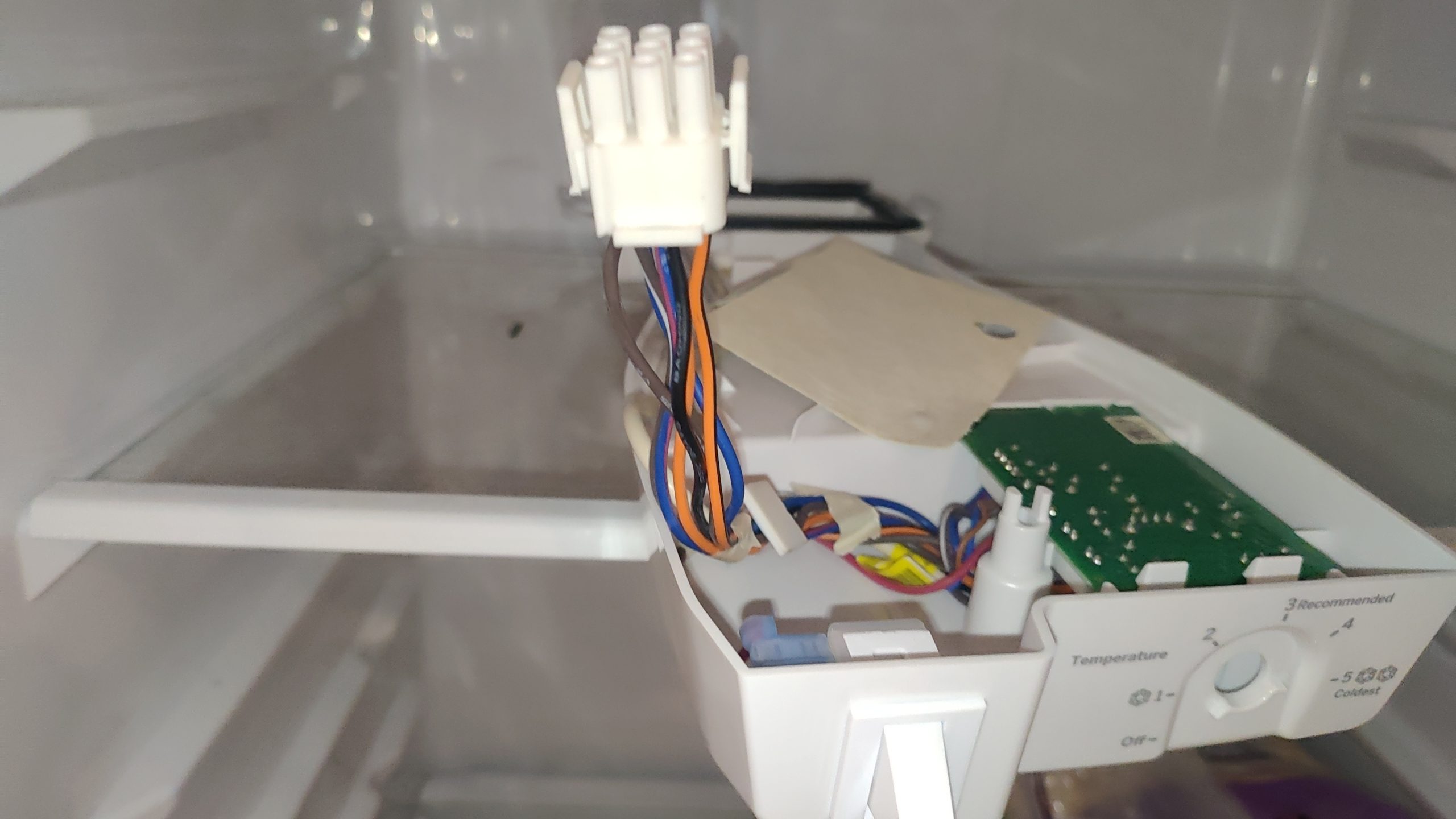
During diagnosis, I moved the upper control connector.
For about one second, the refrigerator suddenly came back to life. Then it went completely dead again.
That one-second startup changed the direction of the diagnosis.
Movement at the connector or harness was briefly restoring contact somewhere in the hidden wiring.
The problem was not simply a dead compressor or a failed control assembly. There was a physical break somewhere inside the concealed harness.
Why I Abandoned the Drain-Line Route
My first idea was to run a replacement power wire through the existing drain path.
That would have bypassed the hidden section without opening the lower freezer divider.
I changed that plan and decided to expose the internal connector first so I could see the actual wiring arrangement.
That decision turned out to be critical.
In American appliances, a line-voltage conductor is often black. In this harness, however, line voltage was carried by the brown wire — the same wire that had broken.
There was no way to identify every conductor beforehand with a meter because the two connectors were located in different parts of the refrigerator and the entire harness between them was sealed inside the cabinet.
Had I routed a new line based only on the usual wire color, I could have energized the wrong circuit, damaged working components, and ended the repair.
The hidden connector had to be exposed first. Only then could the actual wiring path be confirmed.
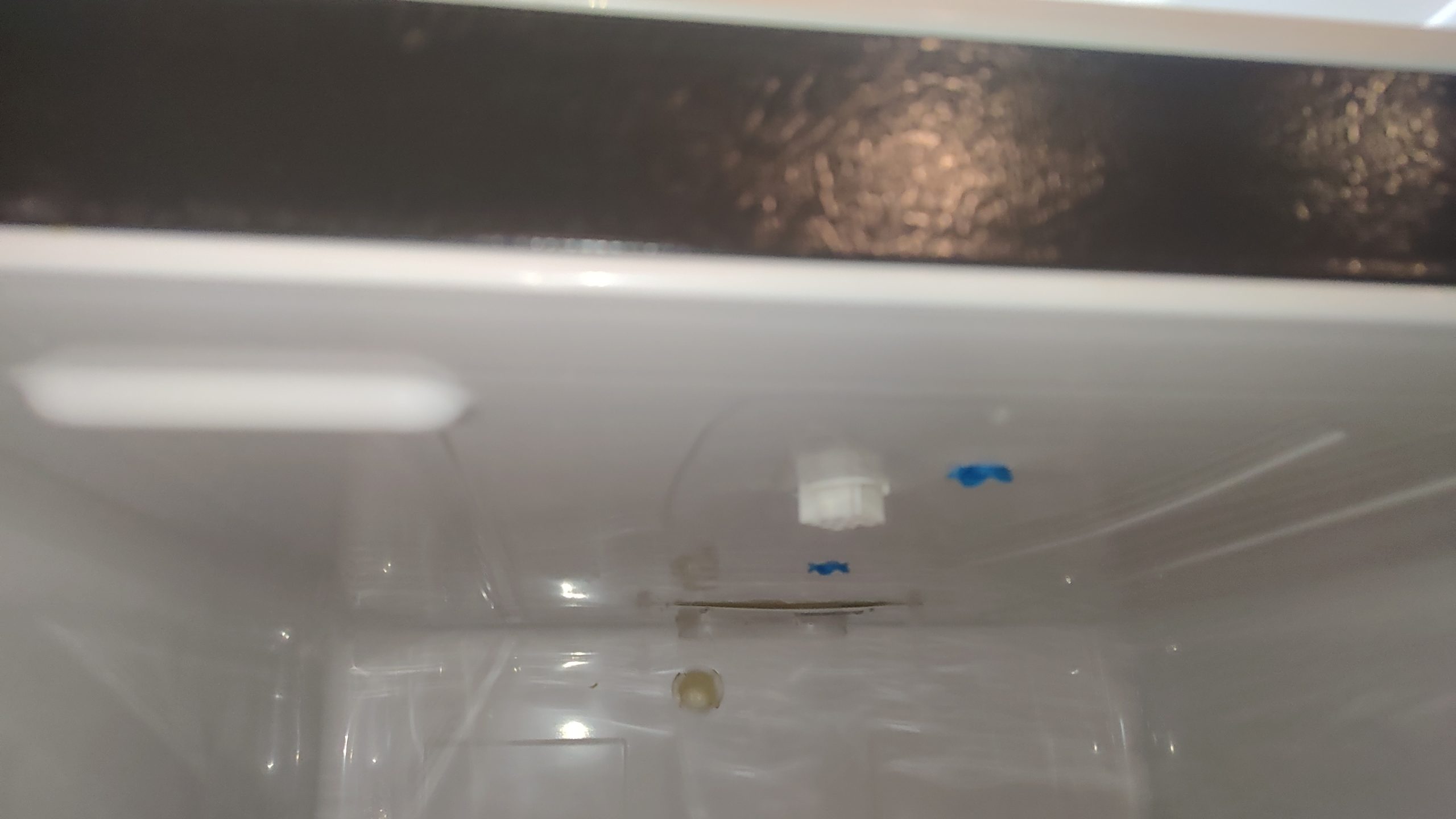
Opening the Divider
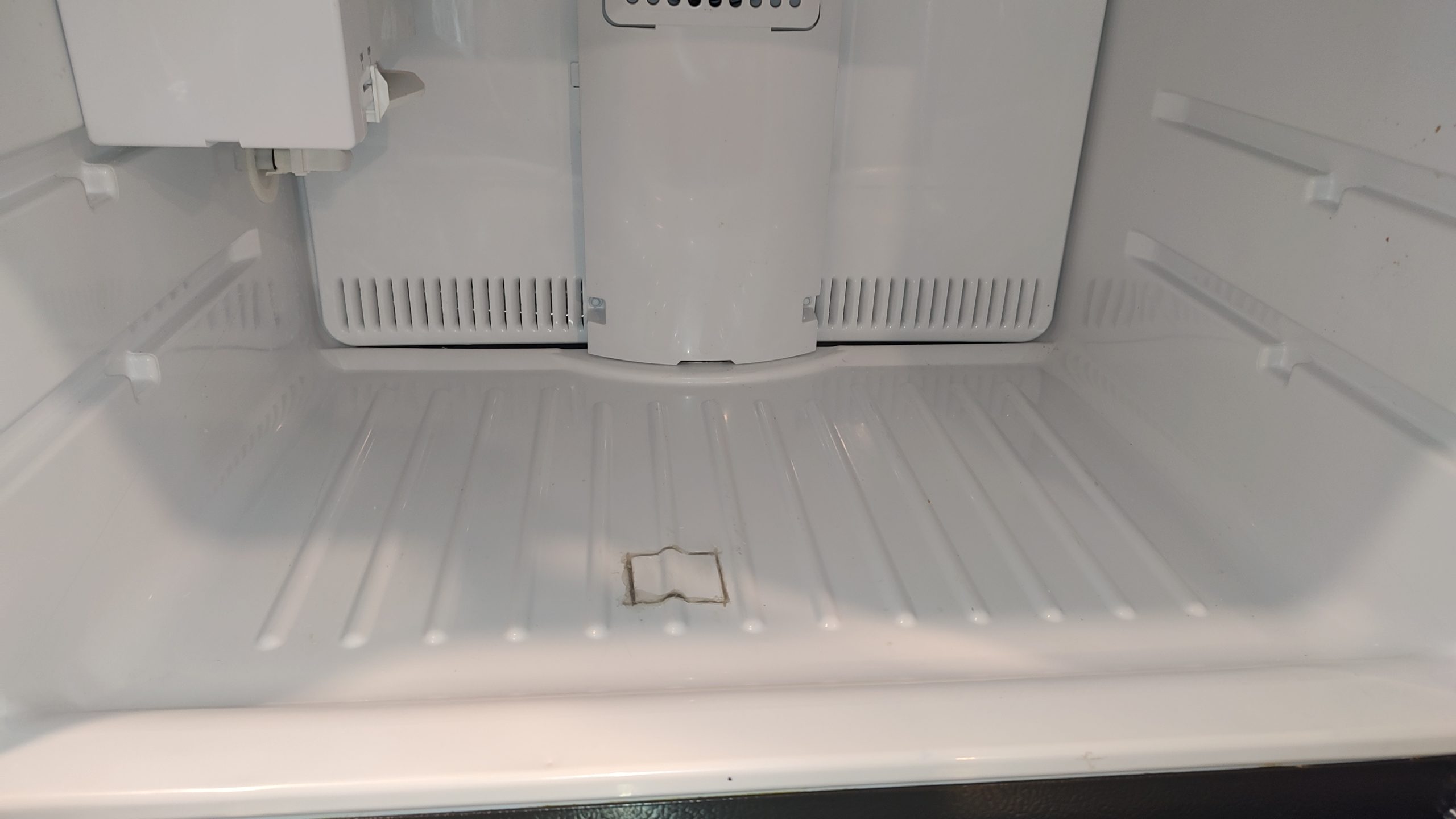
To reach the connector, I had to open the plastic floor of the freezer compartment.
Behind the plastic was the thermal insulation, with the harness buried inside it.
I cut only the section needed for access and removed insulation from a limited area until the hidden connector became visible.
The Failure Inside the Cabinet
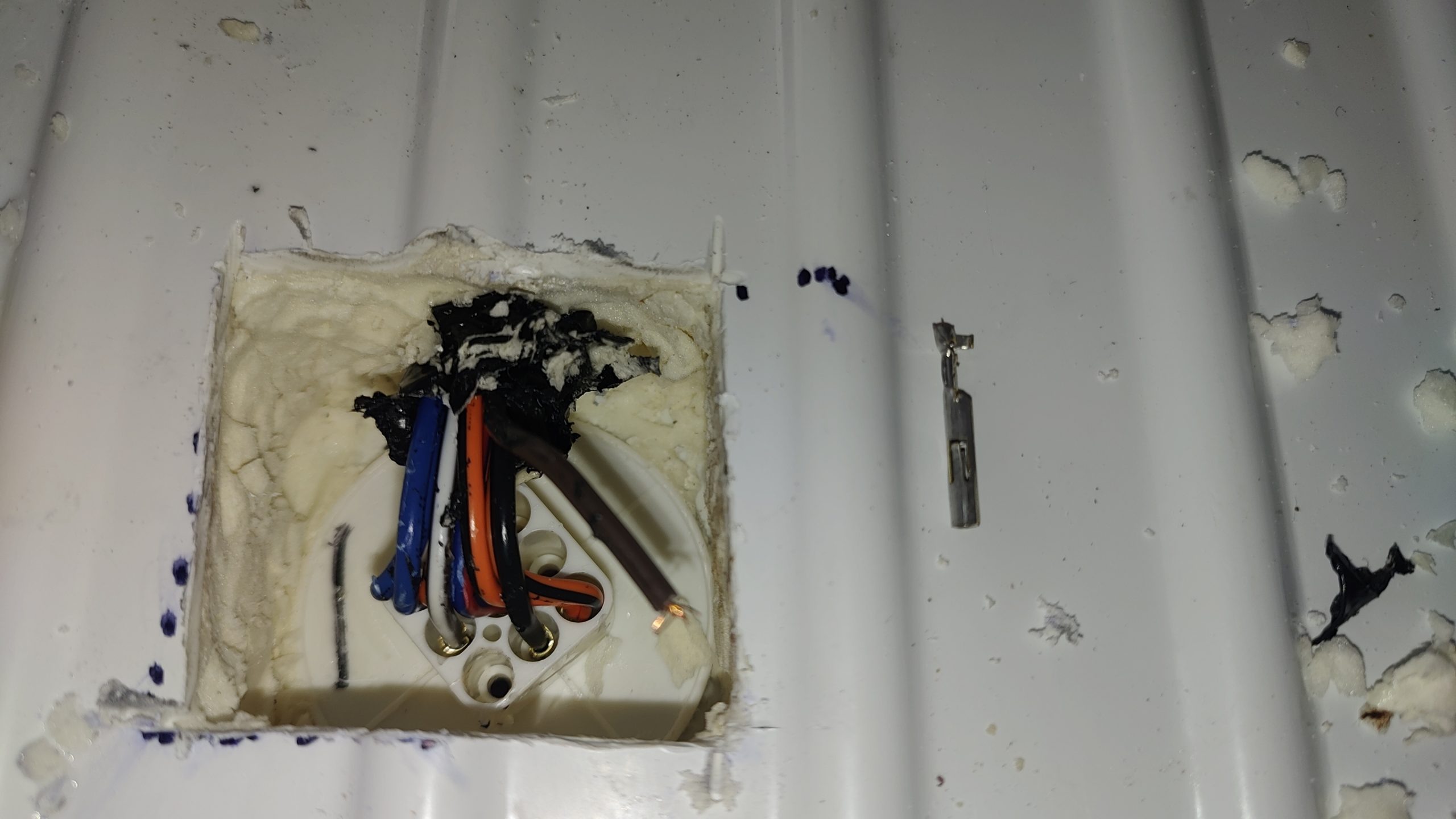
Once the divider was opened, the actual defect was visible:
The brown power wire had broken near the hidden connector.
That explained why moving the upper harness could briefly restore power. The broken conductor was making temporary contact, allowing the refrigerator to start for a moment before opening again.
There was no way to see this failure from outside the cabinet.
Routing a New Dedicated Wire
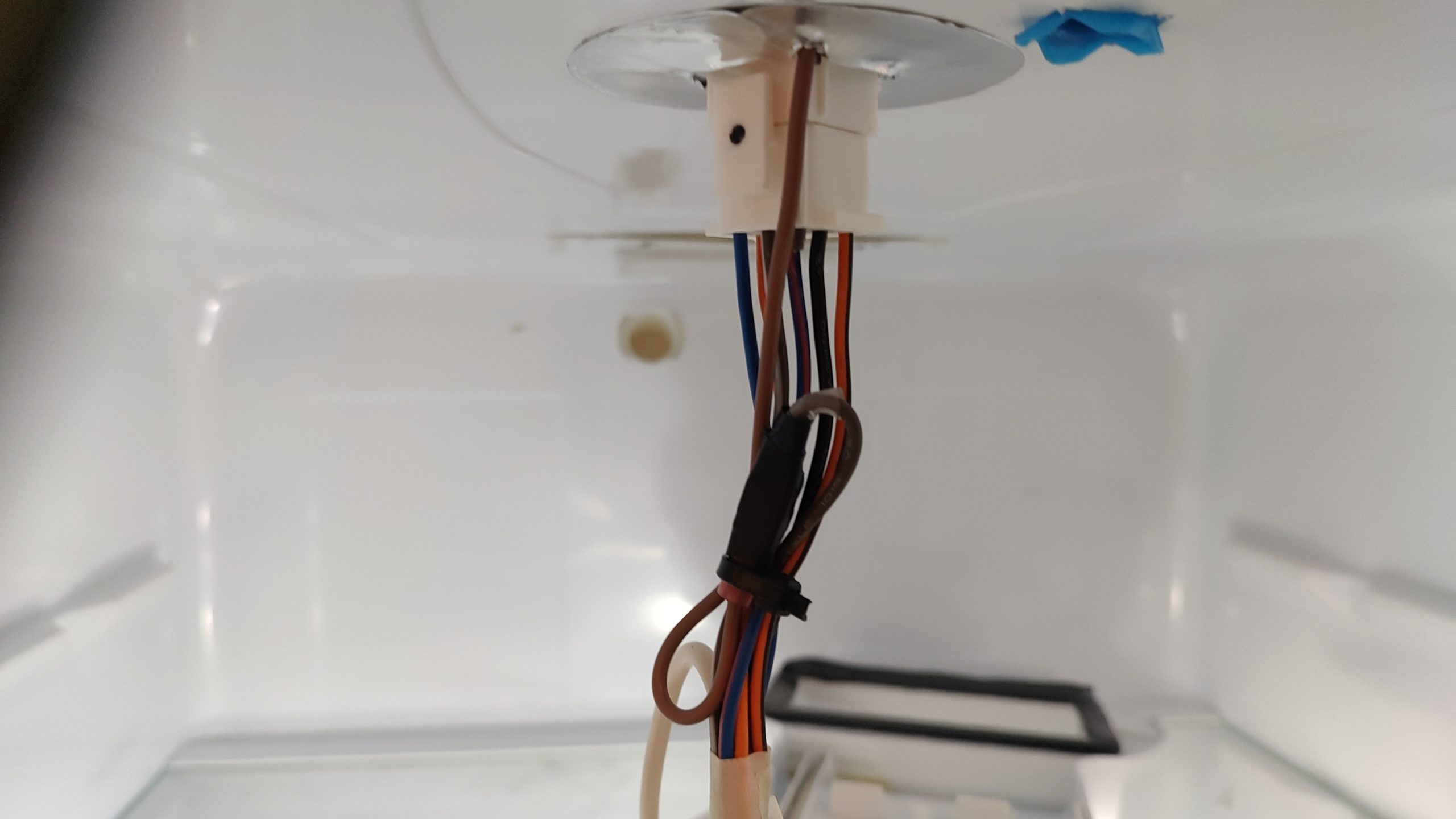
The failed section was buried inside a closed cabinet, so restoring the original path was not practical.
Instead, I routed a new dedicated wire around the damaged section and restored the original function of the power circuit.
Before closing the cabinet, I powered the refrigerator back on.
The result was immediate:
-
The interior light came on.
-
The controls powered up.
-
The compressor started.
-
The refrigerator settled into its normal operating sound.
-
Power remained stable.
The refrigerator had looked completely dead before the repair. After the new line was installed, it operated normally again.
Restoring the Insulation and Interior Panel
The electrical repair was only part of the job.
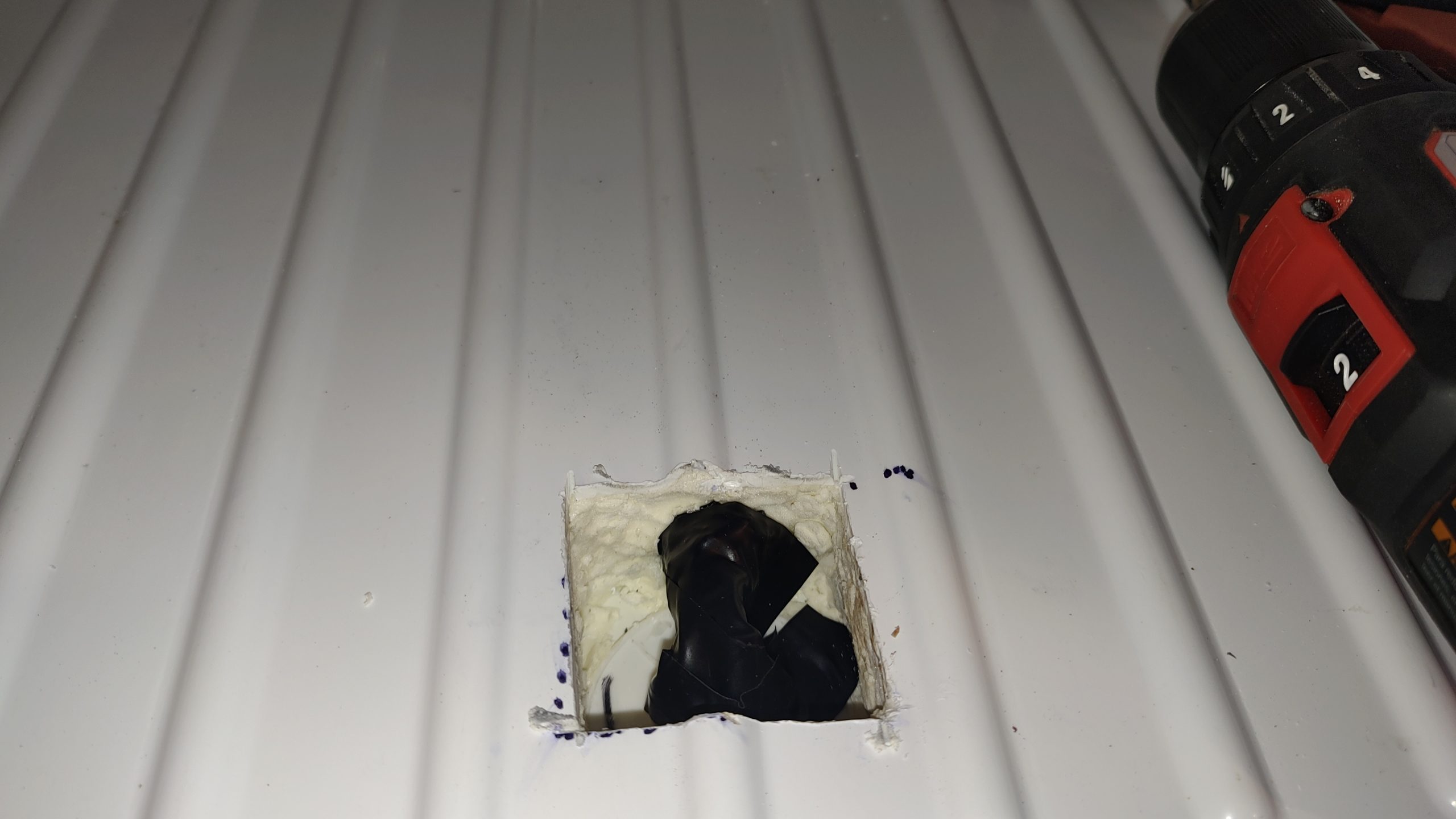
The opened divider had to be rebuilt so it would continue separating the freezer and refrigerator compartments correctly.
After confirming stable operation, I:
-
Restored the insulation around the hidden connector.
-
Repacked the opened area with thermal insulation.
-
Reinstalled the removed section of the interior plastic liner.
-
Sealed the seam with a waterproof polymer adhesive — essentially liquid plastic.
The repair restored both the electrical circuit and the insulated cabinet structure.
What This Repair Says About Appliance Shrinkflation
Appliance shrinkflation is not limited to thinner metal, cheaper plastic, or simplified mechanical parts.
It also includes reduced repairability.
I open and repair appliances every day. I do not see them only from the outside or through marketing materials. As the saying goes, the autopsy tells the truth.
Based on years of service history and what I see inside GE appliances, the trend is obvious: the machines are becoming less repairable.
In this refrigerator:
-
A basic wire connection was buried inside a foamed-in divider.
-
There was no normal service access.
-
One broken conductor disabled the entire appliance.
-
A repair involving a few dollars of wire required opening the cabinet.
-
A conventional service decision could easily have been to condemn the refrigerator.
This is appliance shrinkflation in practical terms:
The refrigerator still looks like a refrigerator on the outside, but inside there is less durability and less access to simple failures.
Shrinkflation is not the main point of this case. The main point is that the refrigerator was repaired.
But this repair shows why more modern appliances are labeled “not repairable” even when the failed part itself is simple. The problem is often not the component. It is the way the manufacturer buried it inside the structure.
Was This Refrigerator Worth Repairing?
Yes.
The compressor, controls, and major systems were still functional. The refrigerator appeared completely dead only because power could not pass through one broken wire.
After the new line was installed:
-
The light came back on.
-
The controls powered up.
-
The compressor started.
-
Normal operation returned.
The refrigerator was not worn out.
It had one hidden electrical failure with no normal service access.
For another case where an otherwise usable GE refrigerator was nearly condemned because the required control board was unavailable, see our built-in GE refrigerator repair in Ridgefield, WA.
Frequently Asked Questions
Why was the GE refrigerator completely dead?
The brown power wire broke near a hidden connector inside the insulated divider. Power could no longer reach the interior light, controls, and operating components.
How did the one-second startup help with the diagnosis?
Moving the upper connector briefly restored contact at the damaged wire. The refrigerator powered up for about one second, showing that the failure was somewhere in the hidden harness.
Why couldn’t the wiring simply be tested from end to end?
The input connector was behind the refrigerator near the compressor, while the output connector was inside the cabinet. The harness between them was sealed inside foam with no intermediate access.
Why did the freezer divider have to be opened?
The hidden connector was located inside the divider between the freezer and fresh-food compartments. There was no other way to see the wire break or confirm the actual wiring arrangement.
How were the wiring and insulation restored?
The failed hidden section was bypassed with a new dedicated wire. After testing, the connector insulation and thermal insulation were rebuilt, the plastic panel was reinstalled, and the seam was sealed with waterproof polymer adhesive.
Does every completely dead GE refrigerator have this problem?
No. A refrigerator with no operation may have a failed outlet, power cord, thermostat, control board, compressor, wiring issue, or another failure. In this case, the hidden wire break was confirmed after opening the cabinet.
The Real Work Was Finding the Failure
One hidden wire made the entire refrigerator look dead.
There was no light, no control operation, and no compressor startup.
After the new line was installed, the refrigerator came back to life.
The difficult part was not the cost of the wire. It was finding the hidden failure, restoring power safely, and rebuilding the cabinet afterward.
A small hidden break shut down the entire refrigerator. Accurate diagnosis brought it back to life.
The EasyFix team 🤝
No Upsells. No Nonsense. Just Honest Work.